Sunday, October 28, 2007

The reality of free speech: The Gujarat episode


----------------
Now playing: Neil Young - We r in control
via FoxyTunes

The recent events in Gujarat are tattering to an Indian's heart. It's not just the Tehelka tapes that have come out in the open; the banning of TV news channels in Gujarat, disgusting comments by the Press and politicians are all a consequence of it which further saddens me.

Mirza in an wonderful read pens down the responses,

BJP spokesman Prakash Javadekar said “This sting has rendered Tehelka as the investigative wing of the Congress”. BJP leader Rajiv Pratap Rudy said “Definitely the sting operation and its content are suspect, because we are aware for sometime that there are detractors against Modi in Gujarat and there is the Congress party, which has lost all ground in the state.” They talk about everything but not about the inhuman brutality. Vir Sanghvi wrote very aptly regarding this in 2002 “I was not surprised when the political establishment scrambled to look for conspiracies: the CIA was behind it, the ISI sponsored Tehelka…My point then, as now, was simple enough: let us first deal with the revelations and then worry about Tarun’s so-called backers.”

Today Chandan Mitra, the editor of the 143 year old newspaper Pioneer and a BJP supported Rajya Sabha MP, invoked the third and the fifth point; Modi has won various elections and why do you take out dead issues now. This is the editor of one of the oldest national newspapers of India! In which moral system and when was justice decided by the street? If someone wins elections does it exonerate them? Mr. Mitra, is the state of journalism going down to this level in India? And since when did we start forgetting about injustices on the pretext of moving ahead? Should we have said the same to the Sikhs who were hounded in 1984? Should we have said the same to the utterly vulnerable Jews who were brutalized and killed in millions by the Nazis? That it will be all decided in the court of law and forget about it in the social aspect.

When I myself went to Ahmedabad last december, I was shocked to learn about and see the ghettoization of the Muslims; rich and the poor in the officially put 'world class city'. But the other issue was, whoever I met (hindus only), were sort of equating Modi to Gabriel as a messenger of god.

And what about free speech? The governments decision to ban all the TV channels that showed the news clip is now a rider to the free speech clause in the Constitution. Hah! gone are the days when Article 19 1(a) was the ultimate sword for the press. If my readers are interested, I'd request you to read Express Newspapers v. Union of India; an amazing case that exposed the link between Gov action and free speech in 1985 and the Delhi riots. (A related article here)

We seem to live in a world of our own. Assuming time and again that Governmental action is free from violence, where as it is so evident in such situations. Those who know that law or are learning it, refuse to budge a little and understand it in terms of its impact on the society. The incidents show a fallacy in the law. That rights in India are only meant to be in thick Constitutional law books and when it comes to situations like Gujarat and media exposes, they seem to vanish into thin air.

There are means that cannot be excused. And I should like to be able to love my country and still love justice. I don’t want just any greatness for it, particularly a greatness born of blood and falsehood. I want to keep it alive by keeping justice alive.

That was Albert Camu, from Resistance, Rebellion and Death on the French conduct in Algeria. The Indian Express in an editorial writes,

What a sting operation in 2007 says has been in the public sphere since 2002. We have always known that the state in Gujarat allowed the gruesome violence to play out, when it didn’t actively collude in the killings. But there is more to this moment than just that. It frames the special resonance of Gujarat 2002 in the nation’s consciousness. In a country where outbreaks of communal violence have been much too frequent — the anti-Sikh violence in Delhi 1984 ranks among the most shameful — the post-Godhra carnage will not allow us to move on. The evidence of state culpability and the absence of reparation is far too insistent. It calls for some form of accountability to be enforced, before any possibility of closure.

There should be an end to this. My heart goes out to all the victims of such actions.

Live Strong!

Labels: , , , , , ,

Tuesday, October 16, 2007

Common Men, Uncommon Law : Exploring the links between disciplinary proceedings and criminal law

My latest paper. Suggestions invited.

Introduction

Equality in administrative law and procedure is a Dicean concept. It delves into the fact that there must be equality in treatment between public servants and the ordinary citizen. The State- citizen divide in the legal system has always been a debatable issue that only some have sought to address. This issue also comes to the fore in the area of criminal law.

With its roots in the French droit administratif, the system of having disciplinary proceedings for certain crimes conducted by public servants is a facet of the Indian administrative system. It marks the diversion from the old common law system. That however is not the problem. The problem arises when there is a difference in the punishment meted out to these persons for the crimes they have committed that are way different from those meted out to the ordinary citizen for the same crime. Section 197 of the Code of Criminal Procedure still remains as a bar to prosecuting government servants with the latest case being that of UP Chief Miniser Mayawati where the Governor refused to give a sanction under Section 197. This despite a SC decision in Prakash Singh Badal v. Union of India, in December 2006 stating that no sanction is required in corruption cases.

It is observed that the Indian legal system is one bridled with impunity and looks at placing the State above the law. This, despite very well knowing that the state is the creation of the law and consists of the ordinary man itself.

In light of the above theoretical framework, this paper would like to explore the diverse link between disciplinary proceedings and ordinary criminal law. Along with analyzing the laws relevant, the researchers would also be looking at the collection of data concerning the punishments to public servants and finally presenting an argument as to why such a system must not be present today.

................ Download full paper .

Labels: , , ,

Sunday, October 14, 2007

Masooda Parveen's review petition dismissed

Dear Friends,


It is with regret that I inform you that the review petition which was filed by Masooda Parveen against the judgment dated 2.5.2007 passed by the Supreme Court came up before Justices Dalaveer Bhandari and H.S. Bedi today (11/10/07), and has been dismissed.


I may remind you that Masooda Parveen had filed a writ petition under Article 32 and 21 for compensation for the death of her husband, an advocate, in the custody of 17 Jat Regiment in Pulwama, Kashmir, as far back as February 1998. While initially the petition was for compensation and for compassionate employment to the wife, later its scope had been expanded to get the court to lay down some safeguards from the army that enjoys "special powers" in J&K under the J&K Armed Forces Special Powers Act. It was hoped by us that the Supreme Court would use this opportunity to apply the safeguards in the Naga People's Movement for Human Rights case to J&K.


In the judgment dated 2.5.2007 handed down after nearly 9 years of its filing (reported in 2007(6) SCALE 447; copy enclosed) the Supreme Court has inexplicably overlooked crucial facts which pointed to glaring inconsistencies and contradictions in the version of 'accidental death' put forward by the state. It also ignored the fact that despite the closure report in an investigation under s. 174 CrPC being rejected by the District Magistrate, Pulwama, and Rule Nisi being issued by the Supreme Court, the local administration "lost" the inquest file and all the critical documentation contained in it.


In the judgment, the Supreme Court has unquestioningly accepted the army's bald version that the deceased had been a 'militant', when not a scrap of evidence exists for such a serious allegation. It has further observed that the petitioner has not been able to show her version of events was true. Placing the burden of proof squarely on the petitioner, the judgment contradicts the body of existing law where the burden lies on the state to show how the death occurred in incidents of custodial death. Such burden must for obvious reasons be even higher where death occurs in Army custody in a disturbed area where the Armed forces are, theoretically, operating under the supervision of the 'civil authorities'.


A further disturbing aspect of the judgment is that it proceeds to carve out an exception to directions made by a 5 judge Constitution Bench in the NPMHR judgment ((1998) 2 SCC 109). According to that judgment, the Army is bound by the Constitution of India as well as by the provisions of the Armed Forces Special Powers Act to produce any person arrested by it before the nearest police station with "least possible delay". In that judgment the Supreme Court had also observed that "least possible delay" could not exceed 2-3 hours, since after being handed over at the nearest police station, the arrestee has to be produced before the Magistrate within 24 hours of arrest in accordance with Article 22 of the Constitution.


However, the judgment in Masooda Parveen's case chose to ignore evidence before it that the deceased was in illegal Army custody for at least 30 hours before his death, and instead observes:

" We are also not un-mindful of the fact that prompt action by the army in such matters is the key to success and any delay can result in the leakage of information which would frustrate the very purpose of the army action."

The Government of India had attempted to get just such an exemption in the petition seeking clarification of the NPMHR judgment, and this had been negatived by a 5 judge bench of the Supreme Court by order dated 7.8.2001.


The petitioner widow who has in the intervening years raised her children single-handedly and also been under surveillance by the state, is heartbroken to get this verdict that labels her husband a militant, and therefore by extension herself and her children as well.


But the implications of the judgment go far beyond the private heartbreak of one family. This is probably the first judgment of the Supreme Court interpreting the provisions of the Jammu and Kashmir Armed Forces Special Powers Act. Not only has the Supreme Court lost an opportunity to hold the Armed forces accountable for increasingly heinous excesses against the Kashmiri people, the Supreme Court has also sent out a message virtually endorsing the impunity of the Armed Forces for such acts.


All this, and more, had been placed before the Supreme Court in the Review Petition filed by the petitioner-widow in July 2007 (copy attached), in the hope that the Court would recognise the impact of the judgment dated 2.5.2007 on the petitioner, as well as its larger implications for the people of Kashmir, and therefore reverse it. The Supreme Court has, however, chosen today to dismiss the review petition filed by the petitioner.


With regards,

Shomona Khanna

Advocate

Labels: , , , , ,

Monday, October 8, 2007

The Terror Presidency

The Book I so want to read now; Jack Goldsmith's The Terror Presidency: Law and Judgment Inside the Bush Administration.

In October 2003, President Bush appointed Goldsmith, a self-described conservative who proudly proclaims that he is not a civil libertarian, head of the Justice Department's Office of Legal Counsel, thus making him chief adviser to the president about the legality of presidential actions. Ten months later, Goldsmith resigned because he could not endorse the unlawful policies the administration had implemented in the war on terror.
Shortly after taking office, Goldsmith reviewed a series of highly confidential opinions written by his predecessors in the Bush administration that defended the legality of "some of the most sensitive counterterrorism operations in the government." To Goldsmith's shock and dismay, he found that some of these opinions "were deeply flawed: sloppily reasoned, overbroad, and incautious in asserting extraordinary constitutional authorities on behalf of the President." What was going on?

As Goldsmith recounts in his chilling new book, "The Terror Presidency," he and his Justice Department colleagues (in consultation with lawyers from the State Department, the Defense Department, the CIA and the National Security Council) reached a consensus in 2003 that the Fourth Geneva Convention (which governs the duties of an occupying power and the treatment of civilians) affords protection to all Iraqis, including those who are terrorists. When he delivered this decision to the White House, he recalls, Addington exploded: " 'The president has already decided that terrorists do not receive Geneva Convention protections,' he barked. 'You cannot question his decision.' "

Labels: , ,

Friday, September 28, 2007

Contempt of Court: The Mid-day case

The Supreme Court has stayed the Contempt of Court sentences of the four mid-day journalists. This comes as good news to those who thought the Delhi High Court acted in a hasty manner in passing sentences on those who published allegations against former Chief Justice YK Sabharwal once he had retired from office, even still when they had proof of the same.

The Delhi High Court judgment is a fascinating read. It is evident of the extent to which our Courts can go to protect themselves from any allegations. The judgment may be seen here

I wonder what is going to happen to free speech in this Country with the Courts taking such a stand.

Labels: , , ,

Tuesday, September 25, 2007

Secrecy and Free Speech

On the 22nd of September, the Central Bureau of Investigation (CBI) raided the house of Maj Gen VK Singh, a retired RAW agent and his publishing agency for publishing his book, India's External Intelligence : Secrets of the RAW Revealed. The retired general has now been booked for violation of the Official Secret's Act. (See news clip)

The book spoke about alleged political interference and corruption in the intelligence agency, including claims about the purchase of sub-standard telecom equipment meant for VVIP security. The book claimed there were severe lapses on part of the government that facilitated the escape of senior RAW official Rabinder Singh, who is believed to have fled to the US.

The incident raised various questions about the boundaries of free speech in this Country. Infact, I just remembered reading a similar case in Alan Dershowitz's book, THE BEST DEFENSE. I read about an CIA Agent named Frank Snepp who published a book exposing the fallacies in Vietnam for which he was booked by the US Government. Dersh was to defend him in the case. The case is very very similar to the one that's come up in out Country. Unfortunately in this case, the US Supreme Court in US v. Snepp ruled against Snepp and secrecy has not become an anti-thesis to free speech there. I's afraid that if this case goes to Court then the Indian Supreme Court would do something like the same which would set a bad precedent in regard to cases of free speech and the right to privacy.

The following is a narrative given in Frank Snepp's site,

The narrative...

Among the last CIA agents to be airlifted from Saigon during the closing moments of the war, Frank Snepp returned to CIA headquarters in the summer of 1975 haunted by the loss of his Vietnamese son and lover—and determined to force his colleagues to assist other Vietnamese left behind. But this was the Season of the Reckoning with the CIA under investigation by Congress and unwilling to admit any more transgressions, least of all its final ones in Vietnam. So when Snepp attempted to prompt an internal after-action report to generate support for the abandoned, his colleagues resisted and reviled him, and finally hounded him out of the Agency in an effort to keep a lid on the truth. But Snepp would not be cowed, and for the next eighteen months, with the help of brave friends who risked both career and welfare for him, he carefully and discreetly assembled the report the CIA didn’t want, even as former fellow agents pursued him like a fugitive on the run, attempting to intimidate him into silence.

His expose, "Decent Interval", was published by Random House in total secrecy—the first American book to be brought out this way. But the firestorm of publicity it ignited, including a 60 Minutes exclusive and front-page coverage in The New York Times, drove the CIA and the White House to launch a campaign of retaliation unparalleled in the annals of American law.

While acknowledging that Snepp’s book had had compromised no secrets, the government’s lawyers insisted that its unauthorized publication alone had “irreparably harmed” the nation’s security by creating an impression of a breakdown in CIA internal discipline that could frighten off intelligence sources abroad. They also claimed that it violated an invisible trust and a secrecy agreement Snepp had signed with the Agency, and demanded, as penalty, that he be gagged for life and deprived of all his “ill-gotten gains,” every cent he had earned from his act of “faithlessness.”

They offered no proof to support their allegations of harm, ignored inconsistencies in the six secrecy agreements Snepp had signed, and glossed over the fact that other ex-agents, friendlier to the CIA, had routinely been allowed to publish unapproved books and articles without protest or censure. Even so, a scandalously prejudiced Federal judge succumbed to the CIA’s extravagant national security claims and ruled against Snepp at every turn, reducing him to an American version of Colonel Alfred Dreyfus, the Frenchman ruthlessly martyred for his beliefs.

Along the way an outraged U.S. Senator took further vengeance on the ex-agent-turned-author by blocking his father’s appointment to the federal bench, thus effectively stalling his judicial career and forever souring his relations with his son.

But young Snepp’s ordeal wasn’t over. Months later, in late February 1980, the U.S. Supreme Court took up his case on appeal—and used it to savage both the defendant and the First Amendment.

While upholding the most draconian of the earlier rulings against Snepp—a lifetime gag and confiscation of every penny he’d made from "Decent Interval"—the Court lowered the standard by which the government can gag you or any other American in the name of national security. With its landmark ruling in The United States v. Snepp, the nation’s highest tribunal made it possible for the CIA or any other government agency to silence critics simply by convincing a court that they’re imperiling the “appearance” of airtight official secrecy, whatever that means.

And don’t suppose that genuine national security interests need be at stake. Remember: Frank Snepp was persecuted, prosecuted, gagged and wrecked financially even though the CIA conceded in court that nothing he had made public exposed any official secrets.

Reverberations from the ruling quickly spread through the government and private industry and continue down to the present. Successive presidents from Ronald Reagan to Bill Clinton have used it to justify placing millions of government workers, from FBI agents to park rangers, under censorship rules that prevent them from writing even novels without official approval. The Reagan administration invoked it to limit the reach of the Freedom of Information Act. The Bush administration used it to discourage government workers from blowing the whistle on bureaucratic waste and abuse, claiming that any such disclosure violates an implicit obligation of trust. The Clinton White House relied on the Snepp to try to squelch an early expose of the president’s romantic peccadilloes and to keep criticism of its mid-east policies out of print. The cigarette maker, Brown & Williamson, turned Snepp against whistleblower Jeffrey Wigand and CBS’ 60 Minutes to discourage them from airing the firm’s dirty secrets.

“An unprecedented vote for censorship” is how The Los Angeles Times described the ruling against Snepp. “No court decision in our history,” observed columnist Nat Hentoff, “has so imperiled whistleblowers and thereby the ability of all citizens to find out about rampant ineptitude.”

Labels: , , , ,

Thursday, August 9, 2007

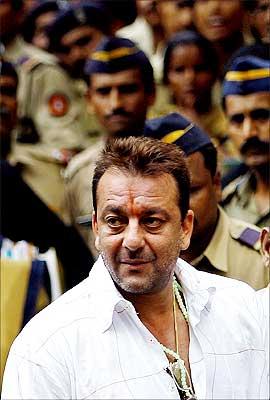
Sorabjee on Sanjay Dutt's Sentence


Has Judge P D Kode been fair to Sanjay Dutt? That was the key question Karan Thapar asked Soli Sorabjee, the former solicitor general and former attorney general, on CNN-IBN Devil’s Advocate.

Karan Thapar: Mr Sorabjee, let us start with the six-years rigorous imprisonment sentenced to Sanjay Dutt. Given that he and his family did face threats and that the gun was never used, is it excessive or fair?

Soli Sorabjee: The minimum sentence that could have been imposed is five years. Instead of five, he gave six. The question is not whether a family was under threat. That’s not the point. That doesn’t come in when you give the mandatory period required by the section.

Karan Thapar: But why did the judge go for rigorous imprisonment?

Soli Sorabjee: That is another point. The Section Penal Code doesn’t talk about imprisonment but there is another section in the penal code, Section 60, which says that it can be rigorous in part and simple in part. May be the judge could have done that.

Karan Thapar: So you think this is an area where the judge could have used his discretion and gone for simple punishment instead.

Soli Sorabjee: I don’t think it’s an error because the judge knows the best. He has seen the whole nature of the case, the circumstances, everything.

Karan Thapar: So in your opinion, you might have settled for a simple imprisonment sentence.

Soli Sorabjee: If I were the judge I would have settled for simple imprisonment for half the period and rigorous for other period.

Karan Thapar: What about something else. Many people say that Sanjay Dutt may be naïve, foolish, rash and impetuous but he is not a criminal. He has already served 16 months in jail. In those circumstances, six-year rigorous imprisonment seems too harsh and in fact excessive.

Soli Sorabjee: I don’t think so. Even if those circumstances were present the imprisonment could not have been for a term of less than five years. That’s clear. Whether rigorous or simple, the term could not have been less than five years. The judge can’t go against what the statute prescribes.

Karan Thapar: If public opinion widely believes that the sentencing is excessive and therefore unbalanced and unfair, would that not throw into question first of all its acceptability and secondly even raise question marks on the credibility (of the sentencing).

Soli Sorabjee: Public opinion, if it’s misinformed, I would like to ignore it. Does the public opinion know that the minimum sentence is 5-years. It cannot be reduced than that. Jude Kode would have committed an illegality if he gave him three.

Karan Thapar: So the only thing that can be questioned is the fact that the prison sentence could have been simple rather than rigorous, that’s all.

Soli Sorabjee: That’s one thing you can. There be two views on that.

Karan Thapar: And you have indicated already that you perhaps would have inclined personally towards simple rather than rigorous.

Soli Sorabjee: No, that’s not what I said. I said that it could have been simple for one period and rigorous for another. He has not held a toy gun or an air gun. This is a serious offence, though not as serious as TADA offence.

Karan Thapar: Let’s then come to some of the legal points that have been raised. To begin with Satish Maneshinde, Sanjay Dutt’s lawyer, has pointed out that even though all the TADA charges against Sanjay Dutt were dropped, the judge chose to refer to the fact that Sanjay had consorted at parties with criminal elements and took the characterization of a gun as weapon of mass destruction whilst explaining the six-year imprisonment.

In other words, facts that were left out at the stage of conviction were borne in mind at the time of sentencing, and Maneshinde concluded that as a result the judge misdirected himself and ended up with miscarriage of sentencing. How do you respond to that view?

Soli Sorabjee: To be quite frank, I have not read the judgement. I have not studied it. But if it is as Sanjay Dutt’s counsel says it is—and he is a very competent council—I would say that prima facie he has been acquitted of TADA charges doesn’t mean that the judge cannot take other circumstances into account as to how Dutt came in possession of those arms.

How did he come in possession? What did he try to do later on? He tried to destroy the evidence that he had the guns. So these are the factors, which you took into account for the purpose of determining whether the conviction was possible under the Arm’s Act.

Karan Thapar: So what you are saying is that even though these facts weren’t used for conviction, they could have been borne in mind at the stage of sentencing without the judge being guilty of either misdirection or mis-sentencing.

Soli Sorabjee: I would not like to say anything about misdirection, not having studied the judgement. But prima facie I don’t think so. By the way, Sanjay is in fact very fortunate. If he were convicted under the TADA, there could have been great problems.

Karan Thapar: Absolutely. And the point is, since the TADA charges were dropped, is it fair that the circumstances that could have applied to the TADA should now be made to apply to the Arm’s Act for the sentencing purposes only.

Soli Sorabjee: I don’t like to use the expression ‘fair,’ because I think the judge was a bit lenient towards him in the way he kept on adjourning the matter, not pronouncing the verdict, and various other things.

But I suppose in the ultimate analysis what you can say is: just look at the offence and then see whether this punishment of six-year rigorous imprisonment could not have been tempered with mercy.

You may temper justice with mercy but not by sentiment. Not by what Bollywood says.

Karan Thapar: What about something else? Judge Kode in explaining the six-year rigorous imprisonment also said that Sanjay was guilty of inducing others to commit a crime when he asked them to dispose off the gun.

Now is that fair because to begin with all that Sanjay did was to telephone from Mauritius. The people he spoke to were adults. They had the right to refuse. So where does the word ‘inducement’ come into this?

Soli Sorabjee: Let’s not stress the word ‘inducement’.

Karan Thapar: But that’s the word the judge used. ‘Inducement’ is a specific that suggests that you are goading someone in some manner.

Soli Sorabjee: Suppose he had persuaded? It’s the same thing. Why did he phone them from Mauritius?

Karan Thapar: But they could have refused? Had they refused he could have found another means but they didn’t. In a sense they willingly agreed.

Soli Sorabjee: But the fact that they willingly agreed doesn’t detract from the fact that he wanted them to do destroy evidence.

Karan Thapar: But it does suggest that he didn’t induce them to commit a crime.

Soli Sorabjee: Well, I don’t know. You are just reverting on the word ‘inducement’. He did try, he did persuade, he did prevail over them and they tried to do it, so they have suffered imprisonment.

Karan Thapar: All right. A second legal issue is to do with Judge Kode’s refusal to grant Sanjay relief under the Probation of Offenders’ Act. Satish Maneshinde points out that the judge erred in not calling for the Probation Officer’s report, because it was mandatory for him to do so. And thirdly, he should have also examined the four witnesses the defence had provided.

Soli Sorabjee: Well, I don’t want to join issues with Shinde. But as far as my reading of the Probation of Offenders’ Act is concerned, I don’t think it is mandatory for the judge to ask for a report.

The fact that he did not ask for a report, I don’t think is an illegality.

Karan Thapar: In considering the issue of probation, should the judge have borne in mind the fact that Sanjay has had a troubled childhood, that he has been a drug addict, has had two broken marriages and yet he has pulled himself together, recreated his life, reformed himself. And now all of that could be at risk if he breaks down in jail.

Soli Sorabjee: Actually, the two main considerations which should regulate judicial discretion in granting probation or not is the nature of the offence and the character of the accused.

For these other factors, I have only asked myself one question: Suppose these factors were present even in the cases of ordinary persons, say Abdul Jalani—I am just naming any person, then we must be very careful that there should be no tilting of these factors one way or the other because Sanjay Dutt is a popular star. Because Sanjay is a very important personality, because his sister is an MP, because they have Dasmunsi and Kapil Sibal speaking out in his favour.

Most important thing is, no signal should go to the people that this is celebrity justice delivery system.

Karan Thapar: And if these factors that I have mentioned have been borne in mind at the time of considering probation, you are worried that the wrong signals would have gone out.

Soli Sorabjee: No, wrong signals would have gone out just because these are factors are there in the case of Sanjay.

Karan Thapar: But just because Sanjay is a celebrity, it is not a reason to treat him the other way either. You seem to be suggesting that scrupulousness may have led to certain unfair treatment because things that could have been considered weren’t considered for all the wrong reasons.

Soli Sorabjee: You have raised a valid point. What I’m trying to say is what is really of importance is, the whole idea of Probation Act is reformation.

Karan Thapar: And here as I pointed out is that the danger that a reformed man may break because he hasn’t been granted benefit under the Probation Act.

Soli Sorabjee: But the whole question is his character in the past.

Karan Thapar: But the character that I’m talking about is that of a reformed man.

Soli Sorabjee: But that past thing that he had a broken marriage and that he was a drug addict and all that, to my mind, is irrelevant. How his behaviour for the last so many months was the thing which is certainly important. And it is a very moot point whether under these circumstances he should or should not have been granted probation.

Karan Thapar: It’s a moot point! In other words it is a questionable and a debatable issue.

Soli Sorabjee: Of course, it is.

Karan Thapar: Would you personally, if you had been the judge, knowing the background of Sanjay, knowing the manner in which he has reformed himself, have granted probation.

Soli Sorabjee: I don’t know how he has reformed himself. I wouldn’t like to hassle an opinion because I knew his father very well and him when TADA was first challenged.

Karan Thapar: Leave that apart. Be a judge, don’t be a friend. Would you have considered giving probate if you were the judge?

Soli Sorabjee: Yes, I would.

Karan Thapar: Now the prosecution have said that they are considering appealing against the fact that the TADA charges were dropped. If they do so, there is no doubt that they have a right to, would it be fair and wise and justified?

Soli Sorabjee: As I said Karan, I don’t know the grounds on which the TADA charges were dropped. Look at it this way: suppose they have been upheld in the case of others and by the same reason and the same evidence, they will interrupt the prosecution.

Karan Thapar: There is an argument that has been made in some newspapers that if Zebunisa Qaidri as well as Mahmood Asar could have been convicted under TADA for either keeping or delivering AK-56 guns, then for Sanjay to be treated differently when the accusation is virtually the same is unfair. Does that in a sense make sense to you?

Soli Sorabjee: I don’t think so, really. The judge must have seen that the circumstances in the two cases were different. One thing is certain that these lawyers have said these were no ordinary weapons but he did not use them.

Karan Thapar: Sanjay’s lawyers are ready to go to the Supreme Court next week, on Monday or Tuesday. What are the chances, given the background of what you have said to me, the court will either reduce the sentence or grant probate?

Soli Sorabjee: The best person to answer that would be Sanjay’s lawyer. I am saying this because I do not know the facts.

Karan Thapar: You just said that had you been the judge you would give him probation.

Soli Sorabjee: I said ‘I’ would. I am not sitting on the Supreme Court.

Karan Thapar: Given that Sanjay has already served sixteen-month imprisonment, I would reckon that somewhere at the end of the next 30 months he would become eligible for remission of his six0year sentence. Are those grounds for the Supreme Court to consider expeditious bail?

Soli Sorabjee: There is no doubt about it that the Supreme Court will consider his bail application expeditiously. And I’m sure that these factors will be taken into account while deciding whether to grant him bail or not, and the various other conditions.

Karan Thapar: So what you are saying to me and I’m repeating because it’s important that you can’t comment on whether the Supreme Court will actually grant probation or whether the SC will reduce the sentence. But you do believe that the Supreme Court will consider and perhaps grant bail expeditiously.

Soli Sorabjee: Oh, yes. Expeditiously and may be, that’s my hunch, that they may take these factors and it may lean in favour of granting him bail. But mind you that media hype could be counterproductive. Sanjay’s friends are not doing him any good. The people are getting put off because of this. That why all this is happening in the case of one person. What happens to others who are rotting in jail?

Karan Thapar: Is there also a danger that what you call media hype might exercise such pressure on Supreme Court judges, that to be scrupulous and ensure that they haven’t in any way wilted, they may actually tilt the other way?

Soli Sorabjee: I think the Supreme Court judges by now are used to media hype, and I think they ignore it. They judge the matter according to the records and according to the provisions of law.

Karan Thapar: So it’s the public opinion that you are saying will get put off by media hype, it won’t really affect the judges.

Soli Sorabjee: I don’t think so. I think the Supreme Court judges don’t get affected by this at least very consciously.

Karan Thapar: Let’s come to the political response to the sentencing of Sanjay Dutt.

Priya Ranjan Dasmunsi has gone on record to express his deep shock and surprise. He says that Sanjay’s fault was unintentional. He adds, “The time has come for the civil society to gauge the parameters for an unintentional fault.”

Should a senior cabinet minister speak out in this way against the court ruling?

Soli Sorabjee: I think it’s inappropriate, especially he being a senior cabinet minister. He may have his own views in the matter. But when he is expressing his views as a cabinet minister, he is actually questioning the correctness of the judgment.

Now the judgment will be up in appeal. And I don’t think it was appropriate.

Karan Thapar: Priya Ranjan Dasmunsi has described Sanjay’s fault as what he calls as an “unintentional fault.” Now I ask you, what is an unintentional fault? Sanjay acquired the gun intentionally. He disposed of the gun intentionally and as you know, ignorance is no defence against the law.

Soli Sorabjee: There is no question of unintentional here. He got them. He knew what he was doing, he knew from whom he has got them. He knew that he had the guns and that’s the reason why he phoned from Mauritius, as you say, to get rid off them.

Karan Thapar: So, not only speaking inappropriately and out-of-tongue, in addition the concept that he has devised of an ‘unintentional fault’ makes no sense.

Soli Sorabjee: Well, I think may be was an off-the-cuff remark. That’s a charitable explanation.

Karan Thapar: Let’s come to a bigger, wider issue. Last week, the courts completed the two major bomb blast cases: the Bombay blasts and the Coimbatore bomb blasts case.

And yet the 1992-93 Bombay riots have been treated very differently. In fact just a few people indicted by the Sri Krishna Commission for those riots have actually been brought to justice.

How do you view this disparity?

Soli Sorabjee: I think it’s scandalous. The recommendations of Justice Sri Krishna report have not yet been duly implemented, not been pursued with the energy that they should. The matters should have come up in the Supreme Court.

At one stage I was there, and I know that the Supreme Court asked the government of Maharashtra what you are doing about it? Then I don’t know what happened. I got off the case, was out off the office. But I think it must be, because it also shatters the people’s confidence in justice.

Karan Thapar: On that particular last point that you have made, do you get the feeling that India responds to those, accused of the bomb blasts, very differently to the way it responds to those accused of riots.

Soli Sorabjee: I won’t say it but it is all about the personalities involved in the Sri Krishna Commission report. I think that’s the reason they don’t want to take action.

Karan Thapar: So it’s politics rather than the differentiation between the two categories of accused?

Soli Sorabjee: Oh yes. Riots also kill people. But bomb blasts affects the whole community.

Karan Thapar: Let me interrupt to tell you why I made that particular point. The vast majority of those accused of bomb blasts particularly in the two cases that I have quoted, were Muslims. The large number of people accused of riots, particularly in the Bombay instance that I have quoted, are Hindus.

Even if this may not be deliberate religious discrimination, will it not appear so to many of those who feel they have been denied justice.

Soli Sorabjee: I don’t think Karan. That’s supportive to circumstances. The question is why you are taking action against those people, against whom action should be taken, on serious offenses? Because they are high political personalities or are there other reasons? I don’t think it’s really the question of Hindu or Muslim as such. I won’t even look at it that way. That’s portentous.

The question is that the two things must not be mixed up. The law must be implemented fully and evenhandedly in both the cases. It was not done in the case of the riots. It’s unfair and as I said, it’s scandalous.

And I think also the Supreme Court, I just read in the paper, have seized off the matter. Mr Yusuf Mushara has done some excellent work, bringing out these facts before the Supreme Court. And I hope the Supreme Court will give preemptory deductions in this matter.

Karan Thapar: What about something else? It’s also reported in the newspapers that of the 60 police officers indicted by the Sri Krishna Commission for their involvement in the riots, as well as the police officers who were identified by the Special Task Force for punishment, only a small number has actually been punished.

The rest have either been ignored or worst still gone scot-free, or in some cases, promoted.

Soli Sorabjee: That’s why I used the term ‘scandalous’. That has to be looked into.

Karan Thapar: But is it just scandalous? Will this sort of uneven treatment, infect this sort of discrimination, if I may use that word, breed disillusionment, disenchantment, and perhaps even dissent in Indian Muslims?

Soli Sorabjee: This is not discrimination by the judiciary. It’s not as if the court has said that those people should be let up. It is a fact that the political executive is not doing anything about it.

Karan Thapar: Absolutely. And the inefficiency deliberate or otherwise of the political executive to act, worst still, perhaps their culpable negligence—will it not breed disillusionment, disenchantment and dissent in Indian Muslims?

They look at their politicians and say, they behave very differently in one case, and very differently when it affects ‘us’.

Soli Sorabjee: But what is ‘they’ here?

Karan Thapar: The politicians and perhaps the police.

Soli Sorabjee: May be. The police could have traversed this all right. But the whole question is, now we should wait and see what happens after the matter is in the Supreme Court.

Karan Thapar: How long will they have to wait? The people have waited perhaps for as much as 16-17 years. Surely patience must be running out for those who are crying out for justice.

Soli Sorabjee: Correct, but now the Supreme Court seized off the matter. I think they should wait and see what the outcome of the Supreme Court directions are and I think that will restore their confidence.

Karan Thapar: So you are saying to those, who are disenchanted and disillusioned, “You have waited for so long. Wait just a little longer. The Supreme Court has taken the matter in its hands. It is bound to produce results.

Soli Sorabjee: Yes, that’s right.

Karan Thapar: It was a pleasure talking to you on Devil’s Advocate.

Soli Sorabjee: Thank you.

Labels: , ,

Tuesday, July 24, 2007

Coming to terms with reality

I was talking to Rachita and Aanchal tonight at the lane (They happen to be very good friends of mine). Its just that somewhere down the line the discussion got down to humanitarian issues and my notion got affirmed.
"We live in this space surrounded by walls on all sides that in our petty existence we forget to come to terms with reality. We forget that there are 300000 people die in darfur, violations take place everyday in Kashmir, government policy seems to be a scam."

Pretty true then that someone in the Times of India wrote the other day that 'NALSAR Ideals fall to Mammon'. The institution talks of itself producing socially active lawyers when all we do is laze around within these four walls. There are times when we need to come to terms with reality. the glitzies of the corporate world then seem to attract us more while we forget to do our bit to save this world that for now seems to be running haywire.
I recommend my readers to read this letter by Dr. Elfarra. It made me understand that human relationships are totally linked to injustice in life. How politics can become an integral part of one's survival.

My mother is in her last moments and I cannot cross the borders

My mother is in the hospital at the moment. She is severely ill. She was admitted to hospital 3 days ago. I cannot reach her.

I finished my 45 day speaking tour in the USA. All across the USA and in every lecture I told the audience about our suffering, living in this big prison called Gaza. I told them about the borders closure and about the patients who passed away while waiting to cross the borders.

The borders have been closed for more than 5 weeks, 28 patients died while waiting to cross the Rafah crossing, the only crossing between Gaza and Egypt. All other exits are completely sealed by the Israeli army. The border was opened 70 times in one year.

Now it is my personal story, like the daily stories of 1.4 million people in GAZA under siege and occupation, poverty, lack of resources, killing, shooting, violence etc....

I cannot cross the borders, I cannot cross the Rafah crossing. I badly need to be next to my mother. I badly need to be there with her to help her, to do whatever I can for her. To say good bye mum.

I was always there for my patients and many people, to help and try to alleviate their suffering. In her last hours I cannot be there, my hands are tied. I am helpless, I can do nothing, I just have to wait and wait and wait. My throat is dry, my eyes are full of tears.

This is unjust, inhuman. It is the occupation. How can it come to be just and fair, when it is mainly based on injustice, aggression and cruelty?

Can somebody help me to go home? I badly need to be at home next to my mother in her last moments.

Good bye mum, I hope you rest in peace, a peace we do not enjoy in Gaza.

with love and solidarity

Mona ElFarra

Sunday 15 July 2007

Labels: ,

Thursday, July 19, 2007

Reserving Reservations!!!

The Supreme Court vacation ended. I now get to come back to my favourite topic ‘reservations’ once again.

On the 17th of July , a Three judge Bench of the Supreme Court sat again to decide on the next steps to be taken as regards to the Centre’s move in increasing the OBC’s by the Central Educational Institutions (Reservation in Admission) Act, 2006 to 27%. From what I heard, Solicitor General Vahanvati decided to give one last shot at asking the Court to allow the Quota to be implemented from this Academic Year itself pending a decision by a Constitutional Bench. There was a great fur ore created by this move and opposing counsels Rajiv Dhawan and Mukul Rohtagi opposed the move by stating that a three judge bench cannot have the power to review a division bench order by Justice Pasayat in May. The Court finally announced;

- That the parties are to file their replies as to the Solicitor General’s argument by the 31st of July.

- That the decision to transfer to a Constitutional Bench however would be taken by the end of next week.

I mentioned in my previous posts that the Supreme Court seems to be inclined towards the American way when it comes to reservations. If this is true, then this is bad news for those who want reservations in the Country. In late June, the United States SC decided Seattle School Dsitrict, a judgment that has partially overruled Brown v. Board of Education. This means that discrimination on the basis of race in admission of schools is now legal in the United States, with certain checks and balances. In the case the Court presents an idea of affirmative action that is something that the Indian Court has sought to borrow. The idea first arose in Grutter v. Bollinger and California v. Allan Bakke where the Court said that affirmative action, particularly in the admission process in universities, must be “narrowly tailored” to promote diversity, but not in such ways as would discriminate against those excluded from affirmative action because they do not belong to ethnic or racial minorities.

The above makes the stance taken by the Indian courts a lot of more confusing as we don’t know which way the Courts will go when it comes to laying down its judgment. For now, Waiting for the decision as to the Constitutional Bench sitting to come out.

Labels: , ,

Sunday, July 1, 2007

The 'Weak End' Post

There is darkness everywhere. My efforts of looking for a ray of light have turned futile. All through out the week, there have been instances of grave injustice all over the world. Electing the head of a state has turned into a political game; Brown v. Board of Education has been partially overruled; One of the world’s greatest manipulators is now to fight for a human rights cause. What more could the world want? This is, to be succumbed by darkness.

This is for the first time I am noticing that electing a president has become more political an affair than any other process. Rather than electing non- political heads, we choose to put in those in favour of a particular party. This influx of ideas had started with Indira Gandhi putting up Giani Jail Singh as a Presidential candidate in the 1970’s and 80’s. How then can one come to terms with such incidents? This takes me back to the Constituent Assembly Debates and what Shashi Tharoor wrote in the Times of India. According to Shashi, the main reason why England chose not to remove the monarch/ royal head was that they feared that the position would become an example of political stigmata. So there was, the true West Minister model of governance.

Contrasting that with India, as smart as we Indians are (that’s sarcasm); we chose to have a West Minister model of Government. In theory the president was suppose to be apolitical. But alas! We don’t see that happening. Our ‘esteemed’ politicians decided to have a republic and elect a president. I think Radhakrishnan was not a victim of such policy. Neither was Rajendra Prasad. The situation however doesn’t remain the same after on. Today the National Democratic Alliance (NDA) makes allegations against a nominee (Pratibha Patil) and puts her credibility to stake. Something disgraceful for someone who could be President of this country. It then was wise for President Kalam not to fall into this trap.

The Bottomline, there is politics in everything. Not to forget that my college Student Bar Council elections are around the corner and political whips are in full swing here too.

So while all this happens in India, racial segregation has got a new meaning in the USA. Brown v. Board of Education (1954) has been partially overruled. That’s true! A few days ago, a nine judge bench of the US Supreme Court stated that certain segregation policies in the schools of Louisiana and another state were perfectly legal. This was a 5:4 ration judgment that has now overturned every aspect of a democratic ideal. Only an idiot cannot estimate the consequences of such a ruling. A New York Times editorial reported that the US Supreme Court has gone to become a Conservative institution and Earl Warren’s ideals no longer remain intact. At one hand where we expect the society to progress towards rationality (Russell) , we seem to be going backwards. Racially targeted recruiting strategies are now constitutionally legal in the United States.

There is also a lot of speculation about Tony Blair getting involved in the Middle east political process. Again NYT said,

“If Blair uses his manipulative skills then a result may be achieved else we must be prepared for a faux pass.”

So darkness prevails. Earlier I wrote that I have lost hope in the system. I now would like to retract from it as I am reminded of Albert Camu. In “Letters to a German Friend” he wrote,

“There are means that cannot be excused. And I should like to be able to love my vcountry and still love justice. I don’t want just any greatness for it, particularly a greatness born out of blood and falsehood. I want to keep it alive by keeping justice alive.”

That’s my stand on the system now.

Readings:

The University of Chicago on the 'School District Cases'. 

Labels: , , , ,

Tuesday, June 19, 2007

The Criminal Language

My criminal law professor made the following statements in class today;

1) 90% of the acquittals in the country happen because of the lack of evidence even though the people have committed the crime.

2) People in the parliament bomb blast and bombay blasts are being acquitted because of the lack of evidence.

3) Jessica lal and Priay darshini Mattoo resulted in disasters at first because of the lack of evidence.

All this happened, as can be observed in the evidence class. I am in a legal institution, one of the best I must say, and am taught to believe that the law is a failure. Such teaching comes from irrelevant facts. Its not just my teacher, but distinguished law people in the Country like Madhav Menon who make such statements and the parliamentarians sitting at the centre blindly trust them and make the law.
For example: The 142 law commission report says that Convicts are acquitted because the law is not strong. This baseless statement was then used as a justification for bringing in plea bargaining in the Country. Madhav Menon states that the conviction rate in the Country for lesser crimes is as low as 40 % where as the NCRB report states it to be 73.2% in Delhi alone. The Parliament says that Convicts are roaming about freely in the Country.

If you observe the examples above, you will see the usage of the word convict by these law makers. Well, you are a convict only is you have been held guilty by a court and not when you allegedly commit a crime. Such usage has made the common man loose faith in a system that is merely applying procedure. We jump to joy to see a man being convicted but the same is not seen if an alleged convict who is innocent is acquitted. Even though Bhagwati and Krishna Iyer made statements like "its more important not to convict an innocent man than to let a criminal go free", we don't seem to follow them anymore. I sometimes feel bad for Manu Sharma. Perhaps he was really innocent and got convicted because of the role of the media and the pressure of the public.
So then there needs to be a way in which crime is reported in the Country. Be it the newspaper or teaching the law. Information must be precise and not a bundle of ridiculous statements that most people would readily believe. As I write this, I feel bad for most of my class who would now be thinking that the criminal system is 'crap' and most Convicts roam free.

Labels: , ,

Saturday, June 9, 2007

Reviewing the Shah Bano legacy.

On June 5, the Supreme Court of India in a significant ruling, held that the Muslim Women (Protection of Rights on Divorce) Act, 1986 would not hinder a divorced Muslim woman's right to maintenance under Section 125 of the Code of Criminal Procedure (CrPC).

Prior to delving into the importance of this judgment, it is imperative that the gamut of events, triggered with the Shah Bano verdict, be explained. In 1985, the Supreme Court in Mohd. Ahmed Khan v. Shah Bano Begum, upheld the maintenance claim of Shah Bano, a divorced Muslim woman of 60 years, under S.125 of the CrPC; the Section provides for relieft to a wife (among others), "unable to maintain herself". However, this judgment created a huge outcry from the Islamic orthodoxy in India. The Rajiv Gandhi-led Government in power, passed the Muslim Women (Protection of Rights on Divorce) Act, to appease the outraged sentiments. The Act, quite ironically, curtailed the rights of Muslim women rather than protecting them. It limited the Muslim husband's responsibility to maintain his divorced wife to the period of iddat. Over the past decade, the Act has challenged over various grounds of Constitutional validity. The apex Court's decision in Daniel Latifi v. Union of India was instrumental in clearing the fog of confusion. The Court in that instance, gave a liberal interpretation of the Act,(specifically S. 3(1)) in so far as the "fair and reasonable" provisions to the divorced Muslim woman shall include maintenance for her future extending beyond the iddat period.

Earlier this month, the two judge-bench comprising Justic Arijit Pasayat and D.K. Jain in the case of Iqbal Bano v. State of Uttar Pradesh overruled the Allahabd High Court's order on the same matter; the H.C had held that the divorced wife is not entitled to maintenance under the CrPC in lieu of the existing Act of 1986. There were questions raised as to whether the divorce effected was proper; to which the Court answered in the negative. While the Act only deals with divorced women the CrPC, in the opinion of the Hon'ble Court, is of broader ambit. A relevant passage from the judgment is quoted below:

Under the 1986 Act the husband has two separate and distinct obligations, viz. to a make a reasonable and fair provision for his divorced wife [for her residence, food, clothes and other articles], and to provide maintenance for her. Though it may look ironical that the enactment intended to reverse the decision in the Shah Bano case it actually codifies the very rationale contained therein.

A judgment is certainly a step in the correct direction to secure the rights of divorced Muslim women unable to maintain themselves, and relieve them of their plight perpetrated by legal instruments such as the Act of 1986.

Labels: , , , , ,

Wednesday, June 6, 2007

Cracking the Whip on Gujjars

Till a while ago, I thought that the Gujjars are going to get away with all the damage that they have caused. The railways alone have suffered losses of upto 200 crores. Rajasthan roadways of about 50 crores and not to mention the lives of about 27 people.

Col. Bainsla, the Gujjar leader may finally have to pay the price for all the damage that the community has caused.

Well not anymore! The state machinery has finally decided to crack the whip on the Gujjars by registering cases against the leaders for murder, destruction of property and conspiracy. Looks like the government was waiting for the exact moment to put these things in place. Earlier when the 'peace accord' was reached, Col. Bainsla the Gujjar leader apologised for all the damage the Gujjars had caused and stated that it was required to attain an end but meant no harm to people. Well, he just will have to pay for it now.

These are the moments I cherish the most. You finally see the law taking its course. Short lived it may though be, but it brings some satisfaction. I just hope this does'nt turn into another mockery and sham.

Labels: , ,

Thursday, May 31, 2007

Fighting for Backwardness


The struggle of the Gujjars in Rajasthan to be included in the Scheduled Tribes (ST) category is nothing but their quest for being ‘backward’ in the law. Chinappa Reddy J in Vasanth Kumar v. State of Karnataka stated that never has he seen castes fighting for backwardness (in the case of ligayats and vookaligas) and this marked the state of our nation. Similar circumstances have arisen now.

The Gujjars are traditional shepherds found across many states in north and western India. They are both Hindus and Muslims. In places like Himachal Pradesh and Jammu and Kashmir, they have been given the ST identity. Haryana and Rajasthan have sought to keep them in the Other Backward Classes (OBC) category. From what I understand, the tension began when the Jats, a powerful community in Rajasthan were classified as OBCs. The Jats constitute 15% of the population in Rajasthan; their classification by the BJP Government was seen as nothing but a political move by which the BJP gained a lot of support.

The procedure for the classification of a scheduled tribe is given in Article 342 of the Constitution. It states

342. Scheduled Tribes.—(1) The President may with respect to any State or Union territory, and where it is a State, after consultation with the Governor thereof, by public notification, specify the tribes or tribal communities or parts of or groups within tribes or tribal communities which shall for the purposes of this Constitution be deemed to be Scheduled Tribes in relation to that State or Union territory, as the case may be.

(2) Parliament may by law include in or exclude from the list of Scheduled Tribes specified in a notification issued under clause (1) any tribe or tribal community or part of or group within any tribe or tribal community, but save as aforesaid a notification issued under the said clause shall not be varied by any subsequent notification.

Pursuant to this the Constitution Scheduled Tribes Order, 1950 was formed which contains the list of tribes. The Gujjars wanted to be included in that list.

But why then would someone want to be included in that list? Are reservations in educational institutions and government offices so tempting that one would sacrifice their identity and status for them? Ironic though, it’s a true state of affairs in this Country of ours. In fact, this situation is perfect for the advocates of anti- reservation to stand up and again raise hue and cry about it. While on one side some amongst us say that there must be reservation in the country to uplift the classes, on the other side we have groups fighting for recognition and that upliftment.

I went through wikipedia and the sources mentioned on Gujjars; and here’s what I could infer:-

a) that the Gujjars are not that economically backward as compared to other tribes in the ST list.

b) There is a lot of vote bank politics involved in their classification as a ST.

c) they were a ‘criminal tribe’ during the british period. (though not an issue now)

Development for certain classes of people in the country then has largely become a political issue. Not that it never was. Its just that now constitutional fundamentals and ideals are being mixed with politics. Nani Palkhivala wrote in the Times of India, (26 Jan 1992) after Indira Sawhney v. Union of India,

‘I am sure Mr. VP Singh was sincere when he said that after the Supreme Court judgment in the Mandal case he could die in peace. But his policy has ensured that the nation will not live in peace. The poisonous weed of casteism has been replanted “where it will trouble us a thousand years, each age will have to reconsider it”.

Its then time for reconsideration of the way reservation is implemented in this country. We are tired of strikes, road blocks and the deaths of people. Violence is being used as a tool for getting demands met. We do not need immediate actions but lasting solutions to such problems.

Labels: , , ,

Sunday, May 13, 2007

Why Human Rights?


I write this at a very crucial time. I, a student of law have to decide which line should I go into; the corporate side and firms where there is easy money, litigation or higher studies. This also comes at a time when the student community is debating about reservations and those who recently finished 12th would soon be on the look out for the appropriate college. Over the past few days I’ve been encountering human rights to a very great extent. Interning with various NGO’s and the Poverty course at the University have been heavily responsible for it. A question that I often ponder about during these time, “Why Human Rights?” is what I’d like to write about in the next few paragraphs.

I observe that no rich man will ever talk about a violation of his human rights, plainly because he has the means to fend for it. The very fact that one of you is reading this article is proof that you know about your rights and have the resources at hand to fight for them. But the problem is that apart from us, there are 250 million in this country and another billion or so in this world who cannot. Neither do they have a preacher nor a protector. Rights exist not for the rich but the poor who are faced with their violations every minute. They are placed at the mercy of state systems that can do as they please with them. While there are 100,000 dying in Darfur, millions displaced in New Delhi as a result of demolitions, and god knows how many languishing in Indian jails without due process; we seem to be divided into three main groups. The first, that has no clue about them and doesn’t want to associate with them. They just want to go on with their so called ‘personal lives’ without even looking at them. The second, reads about them, would like to do something, but then decide that their individual careers are more important and carry on. These two constitute the majority of the population that can fend for themselves incase they are subjected to any injustice. The third group, consists of those who make a difference in this world of inequalities. The members of this group go on the presumption that they exist in this world to fight for those who are affected by human rights violations. And why so? Because the man above did not give them the means to fight for it on their own. Because they cannot stand living in this world with so much injustice going around and lastly because they love their country.

The last line in more of a rhetorical argument. Albert Camu wrote, “There are means that cannot be excused. And I should be able to like my country and still love justice. I don’t want just any greatness for it, particularly a greatness born out of blood and falsehood. I want to keep it alive by keeping justice alive.” Camu’s quote above was written in response to the French injustices in Africa but bears lot of relevance here. The future of my country today is bleak. In the garb of globalization, millions are suffering. At one place the majority poor are being killed for the expense of a few million dollars in building a Special Economic Zone. On the other hand people languish in jails without no idea what the future has in store for them. I find it hard to believe that most of us are silent on issues like Nandigram where states get away by ordering the killing of poor farmers. To add to it, most of us seem to be more interested in the profits that an Indonesian company will make than taking the lives of people.
In my studies at law school and successive internships I understood that the most important word is ‘rights’. Once my rights are secure, only then can I look at others. In as much as some activists might argue that rights are founded on concentration camps, displaced people or the poverty stricken, I stick to the belief that it is not a gift given by the state or a decree passed by the Court, but a possession that has to be won everyday. But does one be have to be an egotist and draw the line at his rights only or does he have to look beyond? History has witnessed enough of egotists and knows too much of its consequences. I could go on passionately as most activists do as to how we need to protet human rights and all that stuff but I’d like to stop here to delve upon a greater issue, “rational legal thinking”.
Within the human rights circle I observe that there are just a few who fight not for the people but for the law. They believe in the black letter of the law and abhor the twisting of the laws for some and not for others. If I were to emulate anyone in the future it would be these kind of people. They are way above the HR activists and fight for the forsaken because they believe in the strength and application of the law. Not bundled with emotions or any passion, they rationally argue for the poverty stricken and the violated and gain ground through the legal system.
So while I intern with a person who believes in the black letter above I see a sense in their struggle with returns. But I then ask myself if this is the path I want to take as financial considerations seem to take the upper hand.
I have three more years to go at law school. Enough time to decide what to do. Umm... Let's see where I eventually land up...

Labels: , ,

Tuesday, April 3, 2007

SC on reservations

The Supreme Court recently stayed the Government law on reservations for OBC's in India.

The case judgment is available here.

Here's what people are saying about it;


Bong Buzz writes ; The Supreme Court has temporarily stayed the government order of reserving seats for OBCs in higher education. However, there is nothing much to rejoice. For this is only an interim order. The court stayed the order only on the ground that there is not enough data on OBC demographics, that no data on this has been collected in the last 76 years. Now if the govt. readies a hurried report on OBCs the court will no more be able to say government has no data. Moreover the court has clarified that the benefits enjoyed by the Scheduled Castes and Scheduled Tribes can’t be withheld. So much for the Supreme Court! So much for India! Living in India, how can we expect justice? This is the land where caste-based reservation will continue and Lalu Prasads and all will continue to rip political benefits out of that. There is only one way out - leave the country!

..............................................

2paisaworth writes; If the SC's objection is that the census data on which the percentage of OBCs in the population is based on is outdated, then the OBC quota in Government jobs in the 1990s in the wake of the Mandal report also ought to have been quashed with the same argument. Karat is right because the SC's stay is over an non-issue. By questioning merely the veracity of the data, rather than the basis for reservation itself, the SC has implicitly acquiesced to the Centre's twisted logic for the implementation of quotas.

There's a strange incongruity in the rationale for celebrations in the anti-quota camp today and the SC judgment. Somehow people don't seem to get it. I've heard "anti-quota spokesmen" (where did that epithet come from?) from across the social spectrum laud the SC for recognizing that "caste-based reservations only serve to divide the country". The SC has done nothing of the sort. How long will it take for a Government hell-bent on the idea of Quota to come up with more accurate figures?

The debate ought to be on the very raison d'être of reservations, not mere technicalities like this one.

...............................

2kbloggers also has an interesting post on it.

Labels: , , ,

Google
WWW YOUR DOMAIN NAME
http://rpc.technorati.com/rpc/ping