Sunday, October 21, 2007

Bobby's Won !!

Bobby Jindal has one! He is now officially the new governor of Louisiana.

Think I'm writing this for the main fact that he's an Indian and has won in a once segregated state. Born of native Indians in New Orleans, this guy has actually come up the ranks the hard way to win and become the top man in a US State.

NYT reports,

The ascendancy of the Brown- and Oxford-educated Mr. Jindal, an unabashed policy wonk who has produced a stream of multipoint plans, is likely to be regarded as a racial breakthrough of sorts in this once-segregated state. Still, it is one with qualifiers attached.


And yes, like always, the sirens have started hounding louder in India than in the US of his victory. Indian news channels have already started showing videos of Bobby's Indians home and lineages in his town. Similar instances happened when Sunita Williams went to space and when she came to India after that, not one day did i not see her photograph with some school children on the cover page talking about their future.

Bobby Jindal is a nice man. Deserves the credit. But do we Indians always have to make big issues about such instances as if History would never witness them again?

Labels: , ,

Friday, October 19, 2007

Democracy and Pakistan

Is democracy a hard thing to achieve? Pakistan Preseident Pervez Musharaff surely knows how to get away with things in the name of democracy. This time, all the pieces fit in the puzzle.

When Nawaz Shariff wants to come back to his homeland, the moment he lands at the ariport he is packed off to political asylum.

Now Benazir Bhutto comes home and there is a blast with 136 dead and still counting. Solicited Pakistani media was quick to react and put the blame on Al- Qaida who allegedly don't approve of Bhutto's support for the US 'War on Terrorism'. But that does not and should not remove the slight possibility that the President had a hand in this incident. And the motive; to keep his political rivals away in the coming elections.

What baffles me more is the utmost disregard to human life in the midst of political conflict. That democracy has turned out to be a notion of multiple political parties vying for power rather than concern for the people themselves. To be noted is that Pakistan is not the only playground for such antics and this seems to be observed everywhere, be it the USA or even Gujarat. Surely Modi's supposed 'Ram Rajya' is a trick in this regard (To the english media he says its the Gandhian notion of a welfare state, but the common gujarati believes it to be a Hindu state).

I am certain that the coming pakistani elections would be an interesting event to read about.

Labels: ,

Thursday, October 18, 2007

Indian at the Nobel

How many of us know that Al Gore has won the Nobel Peace Prize for his contributions to the environment this year?

- All of us do. :)

How many of us know that he has shared that prize with the UN's Intergovernmental Panel of Climate Change ?

- Most of us do.

Now how many of us know that the head of the IPCC is an Indian who was instrumental in the Panel getting the award ?

- Uhh ! well, not many of us I'm sure.


Dr. Rajendra Pachauri has, as the head of the IPCC become the seventh Indian to become a recipient of the Nobel Prize. Though I don't know if officially the credit would go to him or the organisation, but it still is an achievement. :) And yes, he formerly worked with the Tata Energy Research Institute, was born in Nainital and works out of New Delhi.

“I am only a symbolic recipient but it is the organisation which has been awarded,” Dr Rajendra Pachauri says. But then, didn’t Tagore and Mother Teresa get the award for the achievements of Shanti Niketan and Missionaries of Charity?

....

Although Al Gore was reportedly unhappy with the choice of the Indian, who he feared would be a drag on the organisation because of his strident criticism of the United States, Pachauri won him over with his total dedication to the cause of ecology, which is dear to Gore as well.

Labels: , ,

Thursday, October 11, 2007

In the last post I had displayed this cartoon from the Times of India,

xntricpundits commented the following on it,

Brilliant cartoon.Look at the way the cartoonist sketched it.You can see convoy of cars to your top left,ropes hanging to trees to your top right.Politician wearing goggles..mota golmatol babu in sharp contrast with lean thin frames of farmers and the dog by the side of cot.Politicians PA holding a file named SEZ.
The irony in the carton hits the solar plexus.
Truly India is shining.

Some more facts and figures to add to the previous post,

$ 41.2 billion is the total money earned by the top 5 rich people, India's budget for the health sector is only 4.2% of the GDP.. i.e. around $17 billion.

47% of the population of the city of Mumbai still lives in slums. Plans are underway to make Mumbai Shanghai. Wonder what would happen to the slum dwellers.

Only 7% of the Indian population holds a graduate degree.

In as much as more than $ 40 billion have been poured in the various poverty schemes since 1982, none of them have been successfully implemented.

PS: readers may also see my post on ' How the Other India Lives'

Labels: , , ,

Monday, October 8, 2007

The Terror Presidency

The Book I so want to read now; Jack Goldsmith's The Terror Presidency: Law and Judgment Inside the Bush Administration.

In October 2003, President Bush appointed Goldsmith, a self-described conservative who proudly proclaims that he is not a civil libertarian, head of the Justice Department's Office of Legal Counsel, thus making him chief adviser to the president about the legality of presidential actions. Ten months later, Goldsmith resigned because he could not endorse the unlawful policies the administration had implemented in the war on terror.
Shortly after taking office, Goldsmith reviewed a series of highly confidential opinions written by his predecessors in the Bush administration that defended the legality of "some of the most sensitive counterterrorism operations in the government." To Goldsmith's shock and dismay, he found that some of these opinions "were deeply flawed: sloppily reasoned, overbroad, and incautious in asserting extraordinary constitutional authorities on behalf of the President." What was going on?

As Goldsmith recounts in his chilling new book, "The Terror Presidency," he and his Justice Department colleagues (in consultation with lawyers from the State Department, the Defense Department, the CIA and the National Security Council) reached a consensus in 2003 that the Fourth Geneva Convention (which governs the duties of an occupying power and the treatment of civilians) affords protection to all Iraqis, including those who are terrorists. When he delivered this decision to the White House, he recalls, Addington exploded: " 'The president has already decided that terrorists do not receive Geneva Convention protections,' he barked. 'You cannot question his decision.' "

Labels: , ,

Tuesday, September 25, 2007

Secrecy and Free Speech

On the 22nd of September, the Central Bureau of Investigation (CBI) raided the house of Maj Gen VK Singh, a retired RAW agent and his publishing agency for publishing his book, India's External Intelligence : Secrets of the RAW Revealed. The retired general has now been booked for violation of the Official Secret's Act. (See news clip)

The book spoke about alleged political interference and corruption in the intelligence agency, including claims about the purchase of sub-standard telecom equipment meant for VVIP security. The book claimed there were severe lapses on part of the government that facilitated the escape of senior RAW official Rabinder Singh, who is believed to have fled to the US.

The incident raised various questions about the boundaries of free speech in this Country. Infact, I just remembered reading a similar case in Alan Dershowitz's book, THE BEST DEFENSE. I read about an CIA Agent named Frank Snepp who published a book exposing the fallacies in Vietnam for which he was booked by the US Government. Dersh was to defend him in the case. The case is very very similar to the one that's come up in out Country. Unfortunately in this case, the US Supreme Court in US v. Snepp ruled against Snepp and secrecy has not become an anti-thesis to free speech there. I's afraid that if this case goes to Court then the Indian Supreme Court would do something like the same which would set a bad precedent in regard to cases of free speech and the right to privacy.

The following is a narrative given in Frank Snepp's site,

The narrative...

Among the last CIA agents to be airlifted from Saigon during the closing moments of the war, Frank Snepp returned to CIA headquarters in the summer of 1975 haunted by the loss of his Vietnamese son and lover—and determined to force his colleagues to assist other Vietnamese left behind. But this was the Season of the Reckoning with the CIA under investigation by Congress and unwilling to admit any more transgressions, least of all its final ones in Vietnam. So when Snepp attempted to prompt an internal after-action report to generate support for the abandoned, his colleagues resisted and reviled him, and finally hounded him out of the Agency in an effort to keep a lid on the truth. But Snepp would not be cowed, and for the next eighteen months, with the help of brave friends who risked both career and welfare for him, he carefully and discreetly assembled the report the CIA didn’t want, even as former fellow agents pursued him like a fugitive on the run, attempting to intimidate him into silence.

His expose, "Decent Interval", was published by Random House in total secrecy—the first American book to be brought out this way. But the firestorm of publicity it ignited, including a 60 Minutes exclusive and front-page coverage in The New York Times, drove the CIA and the White House to launch a campaign of retaliation unparalleled in the annals of American law.

While acknowledging that Snepp’s book had had compromised no secrets, the government’s lawyers insisted that its unauthorized publication alone had “irreparably harmed” the nation’s security by creating an impression of a breakdown in CIA internal discipline that could frighten off intelligence sources abroad. They also claimed that it violated an invisible trust and a secrecy agreement Snepp had signed with the Agency, and demanded, as penalty, that he be gagged for life and deprived of all his “ill-gotten gains,” every cent he had earned from his act of “faithlessness.”

They offered no proof to support their allegations of harm, ignored inconsistencies in the six secrecy agreements Snepp had signed, and glossed over the fact that other ex-agents, friendlier to the CIA, had routinely been allowed to publish unapproved books and articles without protest or censure. Even so, a scandalously prejudiced Federal judge succumbed to the CIA’s extravagant national security claims and ruled against Snepp at every turn, reducing him to an American version of Colonel Alfred Dreyfus, the Frenchman ruthlessly martyred for his beliefs.

Along the way an outraged U.S. Senator took further vengeance on the ex-agent-turned-author by blocking his father’s appointment to the federal bench, thus effectively stalling his judicial career and forever souring his relations with his son.

But young Snepp’s ordeal wasn’t over. Months later, in late February 1980, the U.S. Supreme Court took up his case on appeal—and used it to savage both the defendant and the First Amendment.

While upholding the most draconian of the earlier rulings against Snepp—a lifetime gag and confiscation of every penny he’d made from "Decent Interval"—the Court lowered the standard by which the government can gag you or any other American in the name of national security. With its landmark ruling in The United States v. Snepp, the nation’s highest tribunal made it possible for the CIA or any other government agency to silence critics simply by convincing a court that they’re imperiling the “appearance” of airtight official secrecy, whatever that means.

And don’t suppose that genuine national security interests need be at stake. Remember: Frank Snepp was persecuted, prosecuted, gagged and wrecked financially even though the CIA conceded in court that nothing he had made public exposed any official secrets.

Reverberations from the ruling quickly spread through the government and private industry and continue down to the present. Successive presidents from Ronald Reagan to Bill Clinton have used it to justify placing millions of government workers, from FBI agents to park rangers, under censorship rules that prevent them from writing even novels without official approval. The Reagan administration invoked it to limit the reach of the Freedom of Information Act. The Bush administration used it to discourage government workers from blowing the whistle on bureaucratic waste and abuse, claiming that any such disclosure violates an implicit obligation of trust. The Clinton White House relied on the Snepp to try to squelch an early expose of the president’s romantic peccadilloes and to keep criticism of its mid-east policies out of print. The cigarette maker, Brown & Williamson, turned Snepp against whistleblower Jeffrey Wigand and CBS’ 60 Minutes to discourage them from airing the firm’s dirty secrets.

“An unprecedented vote for censorship” is how The Los Angeles Times described the ruling against Snepp. “No court decision in our history,” observed columnist Nat Hentoff, “has so imperiled whistleblowers and thereby the ability of all citizens to find out about rampant ineptitude.”

Labels: , , , ,

Friday, September 21, 2007

Gaza Burning

Israeli authorities have declared Gaza a 'hostile area'. For those who read the papers they would know that the reason is the activities of the Hamas in that area. Israel has totally cut of fuel supplies to gaza and people in the area are not allowed to leave even if they go for medical reasons. Condolezza Rice on the other hand promises to keep supplying aid to the Palestinians there. As a result of no fuel, there is not power in 80% of the city and people are dying in the hospitals because of the impossibility of performance of surgeries and medical attention. The action to allegedly tackle the Hamas, is one that affects the common gazan population. I am myself touched to read and get to know the ground story of such action. Dr. Mona El Farra writes;

Gaza today
I am extremely worried about the power cut off . more than 50%of Gaza electricity is paralysed.at AlAwda hospital , we have enough of fuel to run our alternative electrical generators for one week . all hospital are threatened to stop of its surgical operations and diffrent medical services .if the situation will continue .Many essential medications are lacking on the hospital shelves, I expect the poverty level to increase to unprecedented level. Ordinary Palestinian people pay the price of the occupation , their democratic choice and bewilderment of their leaders.

I promise u that i shall work hard with my team to help people . with your support and solidarity we can do a lot.


Mona elfarra

I recommend all of my readers to read her blog. It's touching. Every time I read it my heart goes out to the palestinians and support for their struggle.

Elie Wiesel, a jew himself commented in 1986 that to be indifferent then is a sin. The greatest concern that one can have is not of security but that of humanity. While the above is preached to the whole world, Israel certainly doesnt seem to be following that. When can we realise the man can live together in harmony and peace rather than fighting over land occupied by themselves.

The problem I have with Israel is that in the 1950's they asked for the sympathy of the world to what Hitler did to them and now seem to be doing the same to the Palestinians. It is a struggle against suppression that the Palestinians pursue and what we can best do is to support people like Dr Mona Elfarra and others in their endeavour.

Labels: , , , ,

Saturday, September 8, 2007

Salwa Judum: A State's response to Maoist Terror


A year ago, the State of Chattisgarh in Central India seemed to me to be a peaceful state. Rich in minerals and a huge tribal population. Little did I know that the political situation in this State would turn out to be one of the most dreaded this country ever witnessed.

In May 2007, I had the good fortune of hearing Nandini Sinder speak at the India International Centre. She spoke about the armed conflict in the state of Chattisgarh and the ill fated consequences of forming the Salwa Judum.

Salwa Judum (translates as "peace mission") is a civil militia formed by the people to resist the Maoist violence. It was formed in 2005, to bring the area dominated by Naxalites under control .The Salwa Judum was alleged by some communist sympathisers to be a government backed organisation that it was supported by the Chhattisgarh government. Even now, the State of Chattisgarh supplies the force with guns, ammunition and basic supplies.

While she did speak of the social consequences of the movement and its impact on political governance, briefly touching upon that, I would like to emphasize its character as non- international armed conflict. What was proposed by the State to be a Counter insurgency program has now resulted in a mass humanitarian situation. In Dec 2006, more than 80 % of the residents in Dante wada distrcit of Chattisgarh were victims of the conflict between the Salwa Judum and the Maoist forces. The atrocities committed are horrifying. Apart from the rapes and indigenous torture techniques, young children are joining the forces and creating a menace of child soldiers in the State.


In the first three months of 2007, more than 280 civilians were killed as a result of the clashes and 60-70 armed personnel killed from each side. more than 48,000 tribals have been displaced from their homes with no basic facilities, education and medical needs.

From a legal point of view, this is in clear violation of the II Protocol of the fourth Geneva Conventions. Protocol II relates to the protection of victims in Non- International Armed Conflict. India, sadly is not amongst the 167 states that have signed this protocol. However, it does have a duty under International customary law not to sponsor such activities. Salwa Judum is a classic example of a situation where the State lets go of its responsibility to protect and 'out sources' it. It then results in a situation of power without responsibility into whose hands the responsibility is devolved. Such usage of power leads to rash consequences on the Rule of Law and democracy.

Prime Minister Manmohan Singh stated earlier that the Naxalite problem is one of the biggest problems the country is facing. But does the above justify the formation of a private army by the State itself? Nandini Sunder and Ramchandra Guha did file a PIL in the Supreme Court in late May and here's what happenned;

A Bench of Chief Justice K.G. Balakrishnan and Justice R.V. Raveendran issued the notice on the petition filed by Nandini Sundar, Ramachandra Guha and E.A.S. Sarma, after hearing senior counsel T.R. Andhyarujina, who brought to the notice of the court the killings and atrocities committed by the `Salwa Judum' in the guise of countering the naxal movement.

Initially the Bench asked counsel that when the Central Government in its assessment to control naxalites menace permitted local restraint groups to be armed, "should the court interfere in such a policy. You must understand that naxalites go on killing innocent people in villages. The police are not coming to the rescue of these people. What is wrong in arming the local people to counter the naxal menace."

It is but astonishing to notice that way the Court has reacted to this issue. It did however issue a notice to the Chattisgarh Government to give an answer for the atrocities that are committed. The 'atrocities being committed' are only a part of the problem in Chattisgarh. The Court did not seem to take note of the devolution of constitutional responsibilities and stuck to the age old line taken in Kartar Singh v. Union of India, that the situation calls for such action and is thus valid. The non- interference and concern shown by the judiciary towards such issues is disturbing to think of.

State sponsored armed conflict is one of the worst forms of humanitarian disasters. The Constitution of India puts a duty on the State to protect its people and in my opinion, the formation of the Salwa Judum is unconstitutional as it devolves this very primitive responsibility of the State. Not surprisingly the State of Chattisgarh is not showing any reactions to the situations prevailing in the State, however it is a shame that the Centre is not asking a reply for the same. The State has kept away from a situation that has gone out of its control.

Till the last few months, this conflict had'nt attracted much attention. It is only of late, that I see regular articles in News papers and Magazine related to the issue. The matter has gone out of control and all we can do now is to wait and see the course that it takes.

...................................................

Some articles on the issue are here;

1) The Backlash - PS Tripathi

2) When State makes war on its own people - A PUCL Report

3) Salwa Judum and International Humanitarian Law - S Varadarajan (The Hindu, 8th September 2007, Editorial)

Labels: , , , , ,

Sunday, August 19, 2007

Exit Wounds: Legacy of the Indian Partition


India completed 60 years of its independence day before yesterday. Ironically, I did not feel even a bit patriotic and proud of it. The State of ours today is in shambles; impunity and violence are rampant. Machinery existent to protect and regulate the use of sovereign power seem to be fading away. Kashmir and Nagaland still burn. Hindus and Muslims still fight. The poor are still poor and we still have a distaste for the caste system. I dont feel proud of this Country.

…………………………………………..

Once in a while, I read the NewYorker online edition to be aware of US sattires and activities. This time however, I saw this article by Pankaj Mishra on the New yorker talking about the legacy of the Indian Partition.

The article starts with an anecdote which is an interesting read;

Sixty years ago, on the evening of August 14, 1947, a few hours before Britain’s Indian Empire was formally divided into the nation-states of India and Pakistan, Lord Louis Mountbatten and his wife, Edwina, sat down in the viceregal mansion in New Delhi to watch the latest Bob Hope movie, “My Favorite Brunette.” Large parts of the subcontinent were descending into chaos, as the implications of partitioning the Indian Empire along religious lines became clear to the millions of Hindus, Muslims, and Sikhs caught on the wrong side of the border. In the next few months, some twelve million people would be uprooted and as many as a million murdered. But on that night in mid-August the bloodbath—and the fuller consequences of hasty imperial retreat—still lay in the future, and the Mountbattens probably felt they had earned their evening’s entertainment.

Pankaj then proceeds to talk about how we Indians made our tryst with destiny and sought to set India free. But that, he argues, was not for the secular India but for protecting the interests of a 400 million hindus and not caring about the Muslims who stayed back in India. The article also talks about Nehru and Jinnah’s policies and actions during the brief period of finalising the partition. The idea of the article seems to be to give a brief of the partition history of India by citing incidents relevant in this regard.

Below are certain excerpts from the article;

But sectarian riots in Punjab and Bengal dimmed hopes for a quick and dignified British withdrawal, and boded ill for India’s assumption of power. Not surprisingly, there were some notable absences at the Independence Day celebrations in New Delhi on August 15th. Gandhi, denouncing freedom from imperial rule as a “wooden loaf,” had remained in Calcutta, trying, with the force of his moral authority, to stop Hindus and Muslims from killing each other. His great rival Mohammed Ali Jinnah, who had fought bitterly for a separate homeland for Indian Muslims, was in Karachi, trying to hold together the precarious nation-state of Pakistan.

……………

Trains carrying nothing but corpses through a desolate countryside became the totemic image of the savagery of partition. British soldiers confined to their barracks, ordered by Mountbatten to save only British lives, may prove to be the most enduring image of imperial retreat. With this act of moral dereliction, the British Empire finally disowned its noble sense of mission. As Paul Scott put it in “The Raj Quartet,” the epic of imperial exhaustion and disillusion, India in 1947 was where the empire’s high idea of itself collapsed and “the British came to the end of themselves as they were.”

The British Empire passed quickly and with less humiliation than its French and Dutch counterparts, but decades later the vicious politics of partition still seems to define India and Pakistan. The millions of Muslims who chose to stay in India never ceased to be hostages to Hindu extremists. As recently as 2002, Hindu nationalists massacred more than two thousand Muslims in the state of Gujarat. The dispute over Kashmir, the biggest unfinished business of partition, committed countries with mostly poor and illiterate populations to a nuclear arms race and nourished extremists in both countries: Islamic fundamentalists in Pakistan, Hindu nationalists in India. It also damaged India’s fragile democracy—Indian soldiers and policemen in Kashmir routinely execute and torture Pakistan-backed Muslim insurgents—and helped cement the military’s extra-constitutional influence over Pakistan’s inherently weaker state. Tens of thousands have died in Kashmir in the past decade and a half, and since 1947 sectarian conflicts in India and Pakistan have killed thousands more.

Many ethnic minorities chafed at the postcolonial nationalism of India and Pakistan, and some rebelled. At least one group—Bengali Muslims—succeeded in establishing their own nation-state (Bangladesh), though only after suffering another round of ethnic cleansing, this time by fellow-Muslims. Other minorities demanding political autonomy—Nagas, Sikhs, Kashmiris, Baluchis—were quelled, often with greater brutality than the British had ever used against their subjects.

Meeting Mountbatten a few months after partition, Churchill assailed him for helping Britain’s “enemies,” “Hindustan,” against “Britain’s friends,” the Muslims. Little did Churchill know that his expedient boosting of political Islam would eventually unleash a global jihad engulfing even distant New York and London. The rival nationalisms and politicized religions the British Empire brought into being now clash in an enlarged geopolitical arena; and the human costs of imperial overreaching seem unlikely to attain a final tally for many more decades.

…………..

We still suffer from the stains left by the partition of India. Communal clashes and Kashmir and the direct causes of it.

Labels: , , ,

Thursday, August 9, 2007

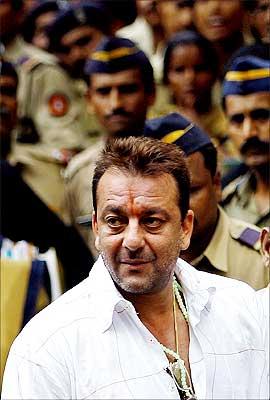
Sorabjee on Sanjay Dutt's Sentence


Has Judge P D Kode been fair to Sanjay Dutt? That was the key question Karan Thapar asked Soli Sorabjee, the former solicitor general and former attorney general, on CNN-IBN Devil’s Advocate.

Karan Thapar: Mr Sorabjee, let us start with the six-years rigorous imprisonment sentenced to Sanjay Dutt. Given that he and his family did face threats and that the gun was never used, is it excessive or fair?

Soli Sorabjee: The minimum sentence that could have been imposed is five years. Instead of five, he gave six. The question is not whether a family was under threat. That’s not the point. That doesn’t come in when you give the mandatory period required by the section.

Karan Thapar: But why did the judge go for rigorous imprisonment?

Soli Sorabjee: That is another point. The Section Penal Code doesn’t talk about imprisonment but there is another section in the penal code, Section 60, which says that it can be rigorous in part and simple in part. May be the judge could have done that.

Karan Thapar: So you think this is an area where the judge could have used his discretion and gone for simple punishment instead.

Soli Sorabjee: I don’t think it’s an error because the judge knows the best. He has seen the whole nature of the case, the circumstances, everything.

Karan Thapar: So in your opinion, you might have settled for a simple imprisonment sentence.

Soli Sorabjee: If I were the judge I would have settled for simple imprisonment for half the period and rigorous for other period.

Karan Thapar: What about something else. Many people say that Sanjay Dutt may be naïve, foolish, rash and impetuous but he is not a criminal. He has already served 16 months in jail. In those circumstances, six-year rigorous imprisonment seems too harsh and in fact excessive.

Soli Sorabjee: I don’t think so. Even if those circumstances were present the imprisonment could not have been for a term of less than five years. That’s clear. Whether rigorous or simple, the term could not have been less than five years. The judge can’t go against what the statute prescribes.

Karan Thapar: If public opinion widely believes that the sentencing is excessive and therefore unbalanced and unfair, would that not throw into question first of all its acceptability and secondly even raise question marks on the credibility (of the sentencing).

Soli Sorabjee: Public opinion, if it’s misinformed, I would like to ignore it. Does the public opinion know that the minimum sentence is 5-years. It cannot be reduced than that. Jude Kode would have committed an illegality if he gave him three.

Karan Thapar: So the only thing that can be questioned is the fact that the prison sentence could have been simple rather than rigorous, that’s all.

Soli Sorabjee: That’s one thing you can. There be two views on that.

Karan Thapar: And you have indicated already that you perhaps would have inclined personally towards simple rather than rigorous.

Soli Sorabjee: No, that’s not what I said. I said that it could have been simple for one period and rigorous for another. He has not held a toy gun or an air gun. This is a serious offence, though not as serious as TADA offence.

Karan Thapar: Let’s then come to some of the legal points that have been raised. To begin with Satish Maneshinde, Sanjay Dutt’s lawyer, has pointed out that even though all the TADA charges against Sanjay Dutt were dropped, the judge chose to refer to the fact that Sanjay had consorted at parties with criminal elements and took the characterization of a gun as weapon of mass destruction whilst explaining the six-year imprisonment.

In other words, facts that were left out at the stage of conviction were borne in mind at the time of sentencing, and Maneshinde concluded that as a result the judge misdirected himself and ended up with miscarriage of sentencing. How do you respond to that view?

Soli Sorabjee: To be quite frank, I have not read the judgement. I have not studied it. But if it is as Sanjay Dutt’s counsel says it is—and he is a very competent council—I would say that prima facie he has been acquitted of TADA charges doesn’t mean that the judge cannot take other circumstances into account as to how Dutt came in possession of those arms.

How did he come in possession? What did he try to do later on? He tried to destroy the evidence that he had the guns. So these are the factors, which you took into account for the purpose of determining whether the conviction was possible under the Arm’s Act.

Karan Thapar: So what you are saying is that even though these facts weren’t used for conviction, they could have been borne in mind at the stage of sentencing without the judge being guilty of either misdirection or mis-sentencing.

Soli Sorabjee: I would not like to say anything about misdirection, not having studied the judgement. But prima facie I don’t think so. By the way, Sanjay is in fact very fortunate. If he were convicted under the TADA, there could have been great problems.

Karan Thapar: Absolutely. And the point is, since the TADA charges were dropped, is it fair that the circumstances that could have applied to the TADA should now be made to apply to the Arm’s Act for the sentencing purposes only.

Soli Sorabjee: I don’t like to use the expression ‘fair,’ because I think the judge was a bit lenient towards him in the way he kept on adjourning the matter, not pronouncing the verdict, and various other things.

But I suppose in the ultimate analysis what you can say is: just look at the offence and then see whether this punishment of six-year rigorous imprisonment could not have been tempered with mercy.

You may temper justice with mercy but not by sentiment. Not by what Bollywood says.

Karan Thapar: What about something else? Judge Kode in explaining the six-year rigorous imprisonment also said that Sanjay was guilty of inducing others to commit a crime when he asked them to dispose off the gun.

Now is that fair because to begin with all that Sanjay did was to telephone from Mauritius. The people he spoke to were adults. They had the right to refuse. So where does the word ‘inducement’ come into this?

Soli Sorabjee: Let’s not stress the word ‘inducement’.

Karan Thapar: But that’s the word the judge used. ‘Inducement’ is a specific that suggests that you are goading someone in some manner.

Soli Sorabjee: Suppose he had persuaded? It’s the same thing. Why did he phone them from Mauritius?

Karan Thapar: But they could have refused? Had they refused he could have found another means but they didn’t. In a sense they willingly agreed.

Soli Sorabjee: But the fact that they willingly agreed doesn’t detract from the fact that he wanted them to do destroy evidence.

Karan Thapar: But it does suggest that he didn’t induce them to commit a crime.

Soli Sorabjee: Well, I don’t know. You are just reverting on the word ‘inducement’. He did try, he did persuade, he did prevail over them and they tried to do it, so they have suffered imprisonment.

Karan Thapar: All right. A second legal issue is to do with Judge Kode’s refusal to grant Sanjay relief under the Probation of Offenders’ Act. Satish Maneshinde points out that the judge erred in not calling for the Probation Officer’s report, because it was mandatory for him to do so. And thirdly, he should have also examined the four witnesses the defence had provided.

Soli Sorabjee: Well, I don’t want to join issues with Shinde. But as far as my reading of the Probation of Offenders’ Act is concerned, I don’t think it is mandatory for the judge to ask for a report.

The fact that he did not ask for a report, I don’t think is an illegality.

Karan Thapar: In considering the issue of probation, should the judge have borne in mind the fact that Sanjay has had a troubled childhood, that he has been a drug addict, has had two broken marriages and yet he has pulled himself together, recreated his life, reformed himself. And now all of that could be at risk if he breaks down in jail.

Soli Sorabjee: Actually, the two main considerations which should regulate judicial discretion in granting probation or not is the nature of the offence and the character of the accused.

For these other factors, I have only asked myself one question: Suppose these factors were present even in the cases of ordinary persons, say Abdul Jalani—I am just naming any person, then we must be very careful that there should be no tilting of these factors one way or the other because Sanjay Dutt is a popular star. Because Sanjay is a very important personality, because his sister is an MP, because they have Dasmunsi and Kapil Sibal speaking out in his favour.

Most important thing is, no signal should go to the people that this is celebrity justice delivery system.

Karan Thapar: And if these factors that I have mentioned have been borne in mind at the time of considering probation, you are worried that the wrong signals would have gone out.

Soli Sorabjee: No, wrong signals would have gone out just because these are factors are there in the case of Sanjay.

Karan Thapar: But just because Sanjay is a celebrity, it is not a reason to treat him the other way either. You seem to be suggesting that scrupulousness may have led to certain unfair treatment because things that could have been considered weren’t considered for all the wrong reasons.

Soli Sorabjee: You have raised a valid point. What I’m trying to say is what is really of importance is, the whole idea of Probation Act is reformation.

Karan Thapar: And here as I pointed out is that the danger that a reformed man may break because he hasn’t been granted benefit under the Probation Act.

Soli Sorabjee: But the whole question is his character in the past.

Karan Thapar: But the character that I’m talking about is that of a reformed man.

Soli Sorabjee: But that past thing that he had a broken marriage and that he was a drug addict and all that, to my mind, is irrelevant. How his behaviour for the last so many months was the thing which is certainly important. And it is a very moot point whether under these circumstances he should or should not have been granted probation.

Karan Thapar: It’s a moot point! In other words it is a questionable and a debatable issue.

Soli Sorabjee: Of course, it is.

Karan Thapar: Would you personally, if you had been the judge, knowing the background of Sanjay, knowing the manner in which he has reformed himself, have granted probation.

Soli Sorabjee: I don’t know how he has reformed himself. I wouldn’t like to hassle an opinion because I knew his father very well and him when TADA was first challenged.

Karan Thapar: Leave that apart. Be a judge, don’t be a friend. Would you have considered giving probate if you were the judge?

Soli Sorabjee: Yes, I would.

Karan Thapar: Now the prosecution have said that they are considering appealing against the fact that the TADA charges were dropped. If they do so, there is no doubt that they have a right to, would it be fair and wise and justified?

Soli Sorabjee: As I said Karan, I don’t know the grounds on which the TADA charges were dropped. Look at it this way: suppose they have been upheld in the case of others and by the same reason and the same evidence, they will interrupt the prosecution.

Karan Thapar: There is an argument that has been made in some newspapers that if Zebunisa Qaidri as well as Mahmood Asar could have been convicted under TADA for either keeping or delivering AK-56 guns, then for Sanjay to be treated differently when the accusation is virtually the same is unfair. Does that in a sense make sense to you?

Soli Sorabjee: I don’t think so, really. The judge must have seen that the circumstances in the two cases were different. One thing is certain that these lawyers have said these were no ordinary weapons but he did not use them.

Karan Thapar: Sanjay’s lawyers are ready to go to the Supreme Court next week, on Monday or Tuesday. What are the chances, given the background of what you have said to me, the court will either reduce the sentence or grant probate?

Soli Sorabjee: The best person to answer that would be Sanjay’s lawyer. I am saying this because I do not know the facts.

Karan Thapar: You just said that had you been the judge you would give him probation.

Soli Sorabjee: I said ‘I’ would. I am not sitting on the Supreme Court.

Karan Thapar: Given that Sanjay has already served sixteen-month imprisonment, I would reckon that somewhere at the end of the next 30 months he would become eligible for remission of his six0year sentence. Are those grounds for the Supreme Court to consider expeditious bail?

Soli Sorabjee: There is no doubt about it that the Supreme Court will consider his bail application expeditiously. And I’m sure that these factors will be taken into account while deciding whether to grant him bail or not, and the various other conditions.

Karan Thapar: So what you are saying to me and I’m repeating because it’s important that you can’t comment on whether the Supreme Court will actually grant probation or whether the SC will reduce the sentence. But you do believe that the Supreme Court will consider and perhaps grant bail expeditiously.

Soli Sorabjee: Oh, yes. Expeditiously and may be, that’s my hunch, that they may take these factors and it may lean in favour of granting him bail. But mind you that media hype could be counterproductive. Sanjay’s friends are not doing him any good. The people are getting put off because of this. That why all this is happening in the case of one person. What happens to others who are rotting in jail?

Karan Thapar: Is there also a danger that what you call media hype might exercise such pressure on Supreme Court judges, that to be scrupulous and ensure that they haven’t in any way wilted, they may actually tilt the other way?

Soli Sorabjee: I think the Supreme Court judges by now are used to media hype, and I think they ignore it. They judge the matter according to the records and according to the provisions of law.

Karan Thapar: So it’s the public opinion that you are saying will get put off by media hype, it won’t really affect the judges.

Soli Sorabjee: I don’t think so. I think the Supreme Court judges don’t get affected by this at least very consciously.

Karan Thapar: Let’s come to the political response to the sentencing of Sanjay Dutt.

Priya Ranjan Dasmunsi has gone on record to express his deep shock and surprise. He says that Sanjay’s fault was unintentional. He adds, “The time has come for the civil society to gauge the parameters for an unintentional fault.”

Should a senior cabinet minister speak out in this way against the court ruling?

Soli Sorabjee: I think it’s inappropriate, especially he being a senior cabinet minister. He may have his own views in the matter. But when he is expressing his views as a cabinet minister, he is actually questioning the correctness of the judgment.

Now the judgment will be up in appeal. And I don’t think it was appropriate.

Karan Thapar: Priya Ranjan Dasmunsi has described Sanjay’s fault as what he calls as an “unintentional fault.” Now I ask you, what is an unintentional fault? Sanjay acquired the gun intentionally. He disposed of the gun intentionally and as you know, ignorance is no defence against the law.

Soli Sorabjee: There is no question of unintentional here. He got them. He knew what he was doing, he knew from whom he has got them. He knew that he had the guns and that’s the reason why he phoned from Mauritius, as you say, to get rid off them.

Karan Thapar: So, not only speaking inappropriately and out-of-tongue, in addition the concept that he has devised of an ‘unintentional fault’ makes no sense.

Soli Sorabjee: Well, I think may be was an off-the-cuff remark. That’s a charitable explanation.

Karan Thapar: Let’s come to a bigger, wider issue. Last week, the courts completed the two major bomb blast cases: the Bombay blasts and the Coimbatore bomb blasts case.

And yet the 1992-93 Bombay riots have been treated very differently. In fact just a few people indicted by the Sri Krishna Commission for those riots have actually been brought to justice.

How do you view this disparity?

Soli Sorabjee: I think it’s scandalous. The recommendations of Justice Sri Krishna report have not yet been duly implemented, not been pursued with the energy that they should. The matters should have come up in the Supreme Court.

At one stage I was there, and I know that the Supreme Court asked the government of Maharashtra what you are doing about it? Then I don’t know what happened. I got off the case, was out off the office. But I think it must be, because it also shatters the people’s confidence in justice.

Karan Thapar: On that particular last point that you have made, do you get the feeling that India responds to those, accused of the bomb blasts, very differently to the way it responds to those accused of riots.

Soli Sorabjee: I won’t say it but it is all about the personalities involved in the Sri Krishna Commission report. I think that’s the reason they don’t want to take action.

Karan Thapar: So it’s politics rather than the differentiation between the two categories of accused?

Soli Sorabjee: Oh yes. Riots also kill people. But bomb blasts affects the whole community.

Karan Thapar: Let me interrupt to tell you why I made that particular point. The vast majority of those accused of bomb blasts particularly in the two cases that I have quoted, were Muslims. The large number of people accused of riots, particularly in the Bombay instance that I have quoted, are Hindus.

Even if this may not be deliberate religious discrimination, will it not appear so to many of those who feel they have been denied justice.

Soli Sorabjee: I don’t think Karan. That’s supportive to circumstances. The question is why you are taking action against those people, against whom action should be taken, on serious offenses? Because they are high political personalities or are there other reasons? I don’t think it’s really the question of Hindu or Muslim as such. I won’t even look at it that way. That’s portentous.

The question is that the two things must not be mixed up. The law must be implemented fully and evenhandedly in both the cases. It was not done in the case of the riots. It’s unfair and as I said, it’s scandalous.

And I think also the Supreme Court, I just read in the paper, have seized off the matter. Mr Yusuf Mushara has done some excellent work, bringing out these facts before the Supreme Court. And I hope the Supreme Court will give preemptory deductions in this matter.

Karan Thapar: What about something else? It’s also reported in the newspapers that of the 60 police officers indicted by the Sri Krishna Commission for their involvement in the riots, as well as the police officers who were identified by the Special Task Force for punishment, only a small number has actually been punished.

The rest have either been ignored or worst still gone scot-free, or in some cases, promoted.

Soli Sorabjee: That’s why I used the term ‘scandalous’. That has to be looked into.

Karan Thapar: But is it just scandalous? Will this sort of uneven treatment, infect this sort of discrimination, if I may use that word, breed disillusionment, disenchantment, and perhaps even dissent in Indian Muslims?

Soli Sorabjee: This is not discrimination by the judiciary. It’s not as if the court has said that those people should be let up. It is a fact that the political executive is not doing anything about it.

Karan Thapar: Absolutely. And the inefficiency deliberate or otherwise of the political executive to act, worst still, perhaps their culpable negligence—will it not breed disillusionment, disenchantment and dissent in Indian Muslims?

They look at their politicians and say, they behave very differently in one case, and very differently when it affects ‘us’.

Soli Sorabjee: But what is ‘they’ here?

Karan Thapar: The politicians and perhaps the police.

Soli Sorabjee: May be. The police could have traversed this all right. But the whole question is, now we should wait and see what happens after the matter is in the Supreme Court.

Karan Thapar: How long will they have to wait? The people have waited perhaps for as much as 16-17 years. Surely patience must be running out for those who are crying out for justice.

Soli Sorabjee: Correct, but now the Supreme Court seized off the matter. I think they should wait and see what the outcome of the Supreme Court directions are and I think that will restore their confidence.

Karan Thapar: So you are saying to those, who are disenchanted and disillusioned, “You have waited for so long. Wait just a little longer. The Supreme Court has taken the matter in its hands. It is bound to produce results.

Soli Sorabjee: Yes, that’s right.

Karan Thapar: It was a pleasure talking to you on Devil’s Advocate.

Soli Sorabjee: Thank you.

Labels: , ,

Tuesday, July 24, 2007

The Will to Hope

There is this very interesting article by Amit Sengupta in the May-June 2007 issue of Combat law. In this article titled, "The Will to Hope", Mr. Sengupta explores the diffusion of the Left in India and the rise of a new power in the form of Hindu fundamentalism. He argues that the BJP and the RSS would come down heavily and learn from their past mistakes. What would then ensue is something similar to what is happening presently in the BJP ruled states, blatant HR violations, communal clashes and prejudices in the name of religion.

"Instead, like primordial creatures of sacred cults who can undergo multiple metamorphosis, the octopus-like parivar, with its many fronts and institutions (unlike the official or radical Left), blooms and flourishes under State patronage. That is why, the Gujarat hate lab is a 100 percent success story; and Gujarat’s prototypes and microcosms are actively spreading, like slow epidemics, in all BJP-ruled or BJP-coalition states: Rajasthan, Madhya Pradesh, Uttarakhand, Chhattisgarh, Orissa, even Karnataka where they tried to communalise a site of shared, secular synthesis: Babubudangiri."


After Nandigram and incidents in Kerala, indeed the left has had to go through rough stages. They seem to be losing their identity in the States they rule. To quote Amit, "West Bengal's openly joining the race as to who owns more malls and multiplexes, big industries and factories". However, in as much as this article is written to show that the left influence is fading, the central theme in the article shifts to a vehement attack on Modi and the BJP ruled states. Amit seems to be talking more about justice to the victims of Gujarat than about Karat and his influence on the left.
True however is the premise that despite a Left backed government in our country, Leftist ideals dont seem to be followed. We looked towards the left when it came to Petrol prices and nothing happened. Nandigram is a black stain on the left that time and again talks about atrocities in Gujarat.

"Meanwhile, the 10 percent growth remains an elusive category for the 93 percent of our unorganised workforce in the informal sector, in urban and rural areas, mostly the poorest. They are compulsively isolated outside the paradigm of social safety, social security, health, education, food, drinking water, or shelter, as constitutional rights, with not even 100 days of employment in a year, despite the fudged up National Rural Employment Guarantee Act and the scrapped National Advisory Council. So what does the neo-liberal State want them to do: line up outside the SEZs and commit mass suicides?"


The above and a reference to farmer suicides seem to divert from the main issue of the article. In the end, Amit states that the UPA- Left must wake up to tackle these issues. True that they must wake up. But the reason should not be that otherwise the BJP would come to power and the consequences would be bad. In not allowing the 'devil to rise', we are asking the squirrel to gear up.
In a one liner to this article, Mr Sengupta looks at a lot of issues to adjust to the Central idea. However, the premises he uses to justify them are baseless.


Labels: , , ,

Sunday, July 22, 2007

Presidents to be

In a continuation to my previous post, I was browsing through India Uncut when I came upon this referral to The Washington Post. The article was titled "Hillary Clinton's tentative dip into Neckline Territory". The post couldn't get any more hilarious. One of the paras says,

With Clinton, there was the sense that you were catching a surreptitious glimpse at something private. You were intruding -- being a voyeur. Showing cleavage is a request to be engaged in a particular way. It doesn't necessarily mean that a woman is asking to be objectified, but it does suggest a certain confidence and physical ease. It means that a woman is content being perceived as a sexual person in addition to being seen as someone who is intelligent, authoritative, witty and whatever else might define her personality. It also means that she feels that all those other characteristics are so apparent and undeniable, that they will not be overshadowed.


And then it goes on as to what it takes for a woman to show her cleavage. Well Pratibha Patil would make quite a contrast to this. I got a comment saying that APJ set high standards which would be difficult to compete with. Well, beat this!
Imagine that in 2008 both of them are woman Presidents and meet each other. One in a sari and the other a Donna Karan gown!!

PS: this post has nothing to do with HR or anything that this blog is meant for. Just felt like putting it up.


Labels: ,

Celebrating Pratibha


Its taken 60 years for us to elect a woman President. After a lot of lashing out by the opposition about her credentials, she finally won it fair.
But is she the right candidate for the Job? A lot of people would argue about that. I'd like to make one thing clear, "We are not America!". I say this because the President is a puppet and a representative head of our Country and in these circumstances qualifications dont matter. Shekhawat might be better for the job, but at the ceremonies and TV shows, I'd rather see my country being represented by a Woman. It is a sign of equality and that gender bias on the face of it has ended in our country.
Look at Ms. Patil. An extremely learned and spiritual lady. Its been a long way for her, standing up all for herself in the 1970's and winning an election 5 times. Then lastly becoming the Governor of a State. For someone who has to sit at Raisina Hill and pass Bills, that is more than enough. It is a sign of vigour and courage that she has put up in her life.
Kudos Ms. Patil. Enjoy your five years at Raisina.

Labels: ,

Sunday, July 1, 2007

The 'Weak End' Post

There is darkness everywhere. My efforts of looking for a ray of light have turned futile. All through out the week, there have been instances of grave injustice all over the world. Electing the head of a state has turned into a political game; Brown v. Board of Education has been partially overruled; One of the world’s greatest manipulators is now to fight for a human rights cause. What more could the world want? This is, to be succumbed by darkness.

This is for the first time I am noticing that electing a president has become more political an affair than any other process. Rather than electing non- political heads, we choose to put in those in favour of a particular party. This influx of ideas had started with Indira Gandhi putting up Giani Jail Singh as a Presidential candidate in the 1970’s and 80’s. How then can one come to terms with such incidents? This takes me back to the Constituent Assembly Debates and what Shashi Tharoor wrote in the Times of India. According to Shashi, the main reason why England chose not to remove the monarch/ royal head was that they feared that the position would become an example of political stigmata. So there was, the true West Minister model of governance.

Contrasting that with India, as smart as we Indians are (that’s sarcasm); we chose to have a West Minister model of Government. In theory the president was suppose to be apolitical. But alas! We don’t see that happening. Our ‘esteemed’ politicians decided to have a republic and elect a president. I think Radhakrishnan was not a victim of such policy. Neither was Rajendra Prasad. The situation however doesn’t remain the same after on. Today the National Democratic Alliance (NDA) makes allegations against a nominee (Pratibha Patil) and puts her credibility to stake. Something disgraceful for someone who could be President of this country. It then was wise for President Kalam not to fall into this trap.

The Bottomline, there is politics in everything. Not to forget that my college Student Bar Council elections are around the corner and political whips are in full swing here too.

So while all this happens in India, racial segregation has got a new meaning in the USA. Brown v. Board of Education (1954) has been partially overruled. That’s true! A few days ago, a nine judge bench of the US Supreme Court stated that certain segregation policies in the schools of Louisiana and another state were perfectly legal. This was a 5:4 ration judgment that has now overturned every aspect of a democratic ideal. Only an idiot cannot estimate the consequences of such a ruling. A New York Times editorial reported that the US Supreme Court has gone to become a Conservative institution and Earl Warren’s ideals no longer remain intact. At one hand where we expect the society to progress towards rationality (Russell) , we seem to be going backwards. Racially targeted recruiting strategies are now constitutionally legal in the United States.

There is also a lot of speculation about Tony Blair getting involved in the Middle east political process. Again NYT said,

“If Blair uses his manipulative skills then a result may be achieved else we must be prepared for a faux pass.”

So darkness prevails. Earlier I wrote that I have lost hope in the system. I now would like to retract from it as I am reminded of Albert Camu. In “Letters to a German Friend” he wrote,

“There are means that cannot be excused. And I should like to be able to love my vcountry and still love justice. I don’t want just any greatness for it, particularly a greatness born out of blood and falsehood. I want to keep it alive by keeping justice alive.”

That’s my stand on the system now.

Readings:

The University of Chicago on the 'School District Cases'. 

Labels: , , , ,

Wednesday, June 6, 2007

Cracking the Whip on Gujjars

Till a while ago, I thought that the Gujjars are going to get away with all the damage that they have caused. The railways alone have suffered losses of upto 200 crores. Rajasthan roadways of about 50 crores and not to mention the lives of about 27 people.

Col. Bainsla, the Gujjar leader may finally have to pay the price for all the damage that the community has caused.

Well not anymore! The state machinery has finally decided to crack the whip on the Gujjars by registering cases against the leaders for murder, destruction of property and conspiracy. Looks like the government was waiting for the exact moment to put these things in place. Earlier when the 'peace accord' was reached, Col. Bainsla the Gujjar leader apologised for all the damage the Gujjars had caused and stated that it was required to attain an end but meant no harm to people. Well, he just will have to pay for it now.

These are the moments I cherish the most. You finally see the law taking its course. Short lived it may though be, but it brings some satisfaction. I just hope this does'nt turn into another mockery and sham.

Labels: , ,

Sunday, June 3, 2007

Caste wars and the National Security Act

On Saturday night, the Government of Rajasthan enforced the National Security Act in eleven of its districts. Most of the news reporters have talked about its imposition but none about its implications. One needs to understand that the Act is basically a ‘preventive detention’ act, one of the greatest legitimate ills in our country. I use the word legitimate because it is a violation that is given sanction to in the Constitution of our country.

The National Security Act, 1980 was imposed under Section 3 (2) which says that if the State government is satisfied that with respect to any person that with a view to preventing him from acting in any manner prejudicial to the security of the State or from acting in any manner prejudicial to the maintenance of Public order, it may impose the Act. In the case of Rajasthan, it was imposed to supposedly prevent the clash between the Gujjars and the Meenas.

But the point is, was the imposition of such a harsh legislation really required? Earlier the District Commissioner of Bharatpur imposed section 144 of the Cr. PC (Prohibition of an Act to prevent public order etc…). Apparently the situation was brought under control in the said district. Our governments have this knack of bringing in the harshest legislations without any understanding of its implications to personal liberty. Such actions more or less have stood the test of time and cannot even be challenged in Court. When there were other options available, then why did the Rajasthan government bring in the NSA? In SR Bommai v. Union of India, the Court held that introduction of emergency powers under the Constitution can be questioned in the Court. The same reasoning should be applied to the NSA.

Preventive Detention in India has unfortunately stood the test of time and its going to be extremely difficult for it to be repealed now. In AK Gopalan’s case, the Court justified preventive detention in the name of maintaining public order. This was later upheld in ADM Jabalpur v. Sivakant Shukla where the Maintenance of the Industrial Security Act (MISA) was upheld. But the point again to be understood is that ‘preventive detention’ under the Constitution was meant to be for the protection of the State and not against some actions ensued by caste wars. The Gujjars and the Meenas may fight, but that doesn’t mandate preventive detention. Executive action without any checks and balances is a toll for destruction of the democratic order. Unbridled powers leads to abuse that violate the very ethos within which they are framed.

I am however given to understand that there have not been many arrests under the NSA in Rajasthan. The gujjars are destroying state property in the State of Rajasthan. Perhaps starting curfews and imposing laws like Section 144 of the code of criminal procedure would have helped more than imposing preventive detention law.

There is a meeting of the Gujjar leaders with the Chief Minister Vasundhara Raje tonight. Hope the meeting ends amicably and the fighting can come to an end.

- Sachin Pilot, Gujjar leaders meet Rajnath Singh

- Gujjars call for a Delhi bandh on Monday

Labels: , ,

Saturday, June 2, 2007

“Shifting Goalposts” within the Indo-US Nuclear Deal.

As negotiations on the proposed nuclear co-operation agreement between India and the United States enter a critical third day, it is extremely important to analyse and understand the impact that the deal, if it comes through, will have on the Indian civilian and strategic nuclear power programmes. The background to the present round of talks had already been sown in July 2005 when both countries had agreed to co-operate on the issue of supply and use of nuclear energy for civilian, peaceful purposes. The consensus arrived at, was hailed as historic and India was said to benefit immensely from the subsequent deal. However, later developments in this regard has witnessed a paradigm shift in the demands and objectives that the United States seeks to attain from this deal; a stand which the Prime Minister Manmohan Singh has referred to as “shifting goal-posts”.

In 2005, at the time of agreement, the U.S had agreed to a policy of non-intervention in any of India’s strategic nuclear programmes as regards the design, development or testing of any nuclear weapons. The deal focussed primarily on the issue of nuclear fuel for civilian purposes and supply from the U.S and the N.S.G (Nuclear Suppliers Group) for the same; this subject to India’s conformity to fuel and reactor norms as specified by the IAEA. However, in late 2006, the U.S. Congress passed the United States- India Peaceful Atomic Energy Co-operation Act, now popularly known as the Hyde Act. The Hyde Act, which received an overwhelming approval in the Congress, has completely redefined the context in which the deal is to be passed. The Act puts a cap on further testing of nuclear weapons by India; in the event of a breach through such testing, co-operation would be suspended. Furthermore, the question of civilian nuclear energy co-operation seems to be a half-way house. India, if one were to understand the terms of the Act, is barred from reprocessing its spent fuel; a limitation on an apparent sovereign right of the nation. Not only is it a restriction on such a right, it shall also result in the piling up of radioactive spent material.

If the 123 Agreement currently in the process of negotiation were to come through in its modified context, India would be subject to terms and conditions entailed in the Hyde Act. Already the U.S legislation has received heavy flak from various political organisations within India. Questions, even those concerning a rethinking of the entire deal has been put forth. Therefore, the present state-of-affairs are critical in shaping the future course of nuclear technology development in India.

In a forum for Greater Co-operation between India and the U.S in New Delhi, Nicholas Burns, the U.S. Under Secretary of State for Political Affairs had stressed on the isolationist policy India had adopted vis-a-vis nuclear power (civilian and strategic) and had emphasized on a “compromise” of sorts with the Hyde Act to ensure rapid development on spheres of civilian nuclear technology. What the Under-Secretary seems to forget is the fact that the isolationist stand had been thrust upon India after Pokhran in ‘74 and ‘98 by US-driven policies of sanctions and other restrictions.

As the world is gradually moving towards a dilution of polarity, with more “Superpowers” emerging in the scene, such a lop-sided agreement cannot be encouraged. To reiterate, India should push for equality within the field of nuclear co-operation and must not push through in haste with the 123 Agreement.

Labels: , , ,

Sunday, April 15, 2007

On Reservations

People do not celebrate or enjoy backwardness. They suffer it and face discrimination, insult and humiliation because of it. Mocking at their aspirations to overcome backwardness betrays casteist prejudice.

The above are the ending lines of Praful Bidwai's article in the Frontline titled "tilting the balance". In the article he makes a remark to the extent that the Supreme Court's decision in Ashok Kumar Thakur is another of those instances where the judiciary seeks to undo the measures for equality proposed by the Government. Considering the amount of heat that the issue of reservations has created, it was expected for the Court to take a stand on this issue.In Ashok Kumar Thakur, the Supreme Court stayed the government order calling for an increase in the quotas for Other Backward Classes (OBCs) in educational institutions. The Courts decision is based upon Indian precedents like Vasanth Kumar v. State of Karnataka, Indira Sawhney and the US decisions of Grutter v. Bollinger and California v. Allan Bakke. In both these US decisions the Court said that that affirmative action, in particular in the admission process in universities, must be "narrowly tailored" to promote diversity, but not in such ways as would discriminate against those excluded from affirmative action because they do not belong to ethnic or racial minorities.
The attitude of the Court in the decision is something to ponder about. I am remimded of Clarence Darrow saying in henry Sweet, that the law makes everyone an equal, but the society does otherwise. Inarguably, in Ashok Thakur, the Court has done otherwise. The fact that even after 60 years of independence we have not been able to achieve our goal of a classless society shows how mindless we Indians have been. When referring to the Mandal Commission in this case, the Court refuse to recognise the findings of the Commission statting that it was based on the 1931 census which is too old to consider. The formulation of an objective criteriion for determing caste backwardness and an OBC was stressed upon.
Other than concurring with Indira Sawhney, the Court has stressed upon Vasanth Kumar, where there was a clash in the status of lingayats and vookaligas. OP Chinappa Reddy in the judgment stated that the issue was nothing but a quarrel between the castes to get the benefit of reservation. He also stated that nowhere else in the world is there competition to assert backwardness and to claim 'we are more backward than you'. Reservation then according to the Court in the case, had become a war among different backward classes.
There then also is an issue of separation of powers. The Government order no doubt is a part of the directive principles of a social order under Article 39 and the goal of a casteless society. Can then such order be challenged on the mere denial of a possiblity of opportunity in an educational instutution? In fact, the truth is, the Supreme Court in our Country has off late tried to involve itself in many executive decisions. Be it the delhi ceiling case or on reservations. A problem occurs when it tries to solve a socio-political debate in a legal manner. Annoucing a stay on the order has now resulted in many institutions with holding their seats till the decision is final. The IIM's are growing impatient. Arjun Singh is in the crow's nest and the Congress has no clue of what to do. A court's decision is suppose to solve an issue, not create so many complications.

Labels: ,

Wednesday, April 11, 2007

The Communal CD

The Bhartiya Janata Party released Bharat ki pukar, "call of India" as a part of its election campaign in the State of Uttar Pradesh in India. The biggest opposition party in the country came up with a CD that talks about Hindu religion in the country and how its sanctity is being destroyed by the Congress. This is happening in a state which has a history of communal violence and a population of 80 million Hindus.
Action is being taken by the Election Commission and the police. FIRs have been lodged against Rajnath Singh and Lalji Tandon. Arun Jaitley on the other hand, has launched a vehement attack as to how the congress is playing a dirty hand in this issue. All things said and done, in a country with 800 million hindus, 65% of whom are illiterate, this is nothing new from a party that has its foundation in hindu religion.
For those who thought that Final Solution was ridiculous, this could get worse.
.......................................................................................

Voiceover: Today Mother India is screaming aloud, "Oh my sons, save me from being broken into pieces again. I no longer have the strength to be enslaved another time. By using terrorists, spreading fear and dividing us, Pakistan wants to break India into pieces. Hyenas hungry for political power are egging them on. They have forgotten what the consequences of this will be. Now, ordinary people of India have to think, do they want slavery again or Ram Rajya in their independent India."

(Cut to image of Ram)

[Song — Ai Bharat ma tere charano mein... ]

.........................................................

Scene 2: `Duty of Muslim women to increase population'

Masterji stops a woman on the road.

Masterji: My child.

Woman: Yes.

Masterji: Elections are coming. Think carefully before you vote. And put your stamp only on the lotus symbol. Because if peace can come to this country, then it can come only under the BJP's rule. Congress and Samajwadi are the government of mullahs and maulvis.

Woman: Forgive me for saying so, but I am also a Muslim and Mullahs and Maulvis consider women their personal property.

[Cut to group women in black chador]

Woman 1: The duty of a woman is to produce children and increase the population.

Woman 2: What this sister says is right. Our leaders have issued an order. That those who produce more than 10 children will get economic assistance.

[Cut back to woman and Masterji]

Woman: This religion considers us as objects to be used.

Masterji: Well said, my child. If all the women become educated and wise like you, then this country's fate will improve.

[Cut to real news clip of speech by saffron-clad woman. "Hindus will produce two children and Muslims will marry five times and produce 35 pups and make this country into an Islamic state."]

..........................................................................................

Scene 3: "You will all have to grow beards"

Masterji [to group of shopkeepers]: Don't let this opportunity pass by. This time if you don't vote for the BJP, disaster will strike this country. The country will be destroyed. The BJP is a party that thinks about the country. It thinks about the Hindu religion. There is no other party like it. The other parties, they are all agents of the Muslims. What else have they done other than this? Prices have gone up. I tell you, we must vote only for the BJP.

Shopkeeper: Masterji, it's time for me to run my shop. Here Hindus and Muslims both come. What is it to me whose government is formed? You have unfurled the BJP's flag first thing in the morning. If you'd like a cup of tea, you are welcome. Otherwise, please excuse me.

Masterji: Tea? You think I am desperate for your tea? It's because I'm concerned about this country and our religion that I'm asking you to vote for the BJP. If you don't vote BJP, you will regret it. This country will be enslaved. First it was enslaved by the British, now it will be enslaved by the Muslims. Even earlier it was enslaved by the Muslims. That Aurangzeb earlier cut your choti [tuft of hair] and took off your sacred thread. And now these tikas on your forehead will have to go and in their place you will have to grow beards. That day you will repent, Panditji. And you will be destroyed and so will this country.

Shopkeeper: He is really irritating!

Friend: Panditji, you are calling the Masterji mad but everything he said is right. If today we don't take care, these tilaks will go and we will all be sporting beards and caps.

Scene 4: `You will end up in burqas'

Masterji [to group of women complaining about the price rise]: Listen, elections are coming and only by your votes can this country and the Hindu religion be saved. Otherwise we are standing in the jaws of slavery again. This time we have to make the BJP victorious and vote on the Lotus symbol.

Woman 1: Well you men know best, we will vote where you say.

Woman 2: People keep coming to ask for our votes.

Woman 3: No one is bothered about prices.

Masterji: That is why I am saying: if the BJP is in power, everything will be all right.

Woman 1: Masterji, why are you chewing your brains? People will vote for whoever they want.

Masterji: It is your brain that has been ruined! You will end up covered in burqas and eating paan!

Scene 5: Muslims abduct Hindu girl

[A social worker comes to a village looking for Chameli chachi. Chachi is lying huddled in bed.]

Social worker: Chachi, what happened?...

Chameli: A Muslim boy pretended to be a Hindu and lured my young daughter away. Fearing badnami, my husband committed suicide. If I say I am going to the police, then those people threaten me [cut to visual of a Muslim man wearing a turban and looking threateningly] that if you report us, we will kill your child. Now you tell me what should I do?

Social Worker: Don't worry, now that I am here, we will take care of you, we will solve everything.

Chameli: Please bring my daughter back. Who knows what kinds of terrible things are happening to her.

[Cut to scene of Chameli's daughter praying in front of a portrait of Krishna.]

Daughter: Om Jai Jagadish Hare!...

[A man walks up and throws the Krishna portrait on the floor.]

Man: If you perform puja in this house again, I will really fix you. Remember that.

Girl: What is this you have done, Ram? You have thrown Bhagwanji's picture! What is this you have done, Ram?

Man: Ram? Ha ha ha! My name is not Ram, it is Shehzad Ali. And I am not a Hindu but a true Muslim! Ha Ha ha ha!

Girl: What is this you are saying? You are lying.

Man: Listen carefully to what I say because from today, I am no longer Ram and you are no longer Geeta. From today your name is Fatima Begum. And tomorrow, you will be married to this boy, Yaamin, according to our rituals. [Cut to picture of an older man laughing in an evil manner.] And then you will have to live with him.

Girl: [Crying] You are lying. This can't be.

Man [slaps girl]: And don't ever utter a name that is against our Islam. What is there in these pictures? [Camera pans to portrait of Krishna on floor.]

Where is God? This is all lies. If you want to pray, pray to that Khuda who has made the whole universe.

Girl: [Breaks down, falls at his feet, and says with folded hands] Let me go back to my home.

Man: Home? Ha ha ha! Which home? This is your home and you will have to live here. And stop this puja-wuja and start namaz. Because by tomorrow, you will have become a true Muslim. Yaamin! Come here. Take this girl away. Tomorrow you will be married to her.

Yaamin: [Grabs girl's hand] Come on, begum. I will make you happy.

[Yaamin drags girl away, minus her dupatta.]

Man: Ha ha ha! When Hindu girls get ensnared by us, they scream and shout but sadly there is no one to listen to them and we have great fun. Ha ha ha ha ha!

Written text on screen: Love in Jihad, injury to Hindu religion, and forced conversion. This is the protection provided by the SP government.

[Social worker goes on a political mission, meets Samajwadi and Congress leaders, and finally decides that the BJP is the party to support.]

............................................


Wonder what the Sangh Parivar has to say about this.


Labels: ,

Google
WWW YOUR DOMAIN NAME
http://rpc.technorati.com/rpc/ping