Tuesday, October 30, 2007

India Shining III: Land Rights!

There is an apparent irony in today's paper. On the front page you have a half page story talking about India's investment and how Mukesh Ambani is the world's richest man (63 billion $ is a lot). On how the sensex has risen 1000 points in 14 days and the top 5 companies have contributed to it.


A few pages afterwards we have a story about 25,000 people marching to the capital to demand land rights and stressing that they have been betrayed by corporates, rich landlords and the likes of them. I was aware that this march was being organised during my stay in the Gandhi Peace Foundation. This march is no joke and I was witnessed the people at ekta parishad planning out everything to the detail.

More...The above above two instances tell us the story of the Indian Nation. Those who get rich do so at the cost of thousands of others. The Planning commission has released a document stating that the issue of naxalism is directly linked to land rights of the poor. Helloo!!!!! "did you take that long to realise it?". The Prime Minister says that he shall form a committee to look into this land issue. Now that he's made the statement the poor will be 'packed off'. That's how diplomacy works in this country. Give them an assurance, a ray of hope and there shall be no issue in the future. The same was with the Gujjars too. Ah well! nobody seems to realise the gravity of the situation. I can just imagine 25000 people coming from gwalior to Delhi on foot just to hear this statement without understanding that 7 Race Course Roadmight hardly do anything. They have bigger things to do; remember the Nuclear deal and saving the coalition!

That is the irony of India Shining. We see it, we know it, but most of us don't raise a voice about it.

Labels: , , , ,

Sunday, October 28, 2007

The reality of free speech: The Gujarat episode


----------------
Now playing: Neil Young - We r in control
via FoxyTunes

The recent events in Gujarat are tattering to an Indian's heart. It's not just the Tehelka tapes that have come out in the open; the banning of TV news channels in Gujarat, disgusting comments by the Press and politicians are all a consequence of it which further saddens me.

Mirza in an wonderful read pens down the responses,

BJP spokesman Prakash Javadekar said “This sting has rendered Tehelka as the investigative wing of the Congress”. BJP leader Rajiv Pratap Rudy said “Definitely the sting operation and its content are suspect, because we are aware for sometime that there are detractors against Modi in Gujarat and there is the Congress party, which has lost all ground in the state.” They talk about everything but not about the inhuman brutality. Vir Sanghvi wrote very aptly regarding this in 2002 “I was not surprised when the political establishment scrambled to look for conspiracies: the CIA was behind it, the ISI sponsored Tehelka…My point then, as now, was simple enough: let us first deal with the revelations and then worry about Tarun’s so-called backers.”

Today Chandan Mitra, the editor of the 143 year old newspaper Pioneer and a BJP supported Rajya Sabha MP, invoked the third and the fifth point; Modi has won various elections and why do you take out dead issues now. This is the editor of one of the oldest national newspapers of India! In which moral system and when was justice decided by the street? If someone wins elections does it exonerate them? Mr. Mitra, is the state of journalism going down to this level in India? And since when did we start forgetting about injustices on the pretext of moving ahead? Should we have said the same to the Sikhs who were hounded in 1984? Should we have said the same to the utterly vulnerable Jews who were brutalized and killed in millions by the Nazis? That it will be all decided in the court of law and forget about it in the social aspect.

When I myself went to Ahmedabad last december, I was shocked to learn about and see the ghettoization of the Muslims; rich and the poor in the officially put 'world class city'. But the other issue was, whoever I met (hindus only), were sort of equating Modi to Gabriel as a messenger of god.

And what about free speech? The governments decision to ban all the TV channels that showed the news clip is now a rider to the free speech clause in the Constitution. Hah! gone are the days when Article 19 1(a) was the ultimate sword for the press. If my readers are interested, I'd request you to read Express Newspapers v. Union of India; an amazing case that exposed the link between Gov action and free speech in 1985 and the Delhi riots. (A related article here)

We seem to live in a world of our own. Assuming time and again that Governmental action is free from violence, where as it is so evident in such situations. Those who know that law or are learning it, refuse to budge a little and understand it in terms of its impact on the society. The incidents show a fallacy in the law. That rights in India are only meant to be in thick Constitutional law books and when it comes to situations like Gujarat and media exposes, they seem to vanish into thin air.

There are means that cannot be excused. And I should like to be able to love my country and still love justice. I don’t want just any greatness for it, particularly a greatness born of blood and falsehood. I want to keep it alive by keeping justice alive.

That was Albert Camu, from Resistance, Rebellion and Death on the French conduct in Algeria. The Indian Express in an editorial writes,

What a sting operation in 2007 says has been in the public sphere since 2002. We have always known that the state in Gujarat allowed the gruesome violence to play out, when it didn’t actively collude in the killings. But there is more to this moment than just that. It frames the special resonance of Gujarat 2002 in the nation’s consciousness. In a country where outbreaks of communal violence have been much too frequent — the anti-Sikh violence in Delhi 1984 ranks among the most shameful — the post-Godhra carnage will not allow us to move on. The evidence of state culpability and the absence of reparation is far too insistent. It calls for some form of accountability to be enforced, before any possibility of closure.

There should be an end to this. My heart goes out to all the victims of such actions.

Live Strong!

Labels: , , , , , ,

Sunday, October 21, 2007

Bobby's Won !!

Bobby Jindal has one! He is now officially the new governor of Louisiana.

Think I'm writing this for the main fact that he's an Indian and has won in a once segregated state. Born of native Indians in New Orleans, this guy has actually come up the ranks the hard way to win and become the top man in a US State.

NYT reports,

The ascendancy of the Brown- and Oxford-educated Mr. Jindal, an unabashed policy wonk who has produced a stream of multipoint plans, is likely to be regarded as a racial breakthrough of sorts in this once-segregated state. Still, it is one with qualifiers attached.


And yes, like always, the sirens have started hounding louder in India than in the US of his victory. Indian news channels have already started showing videos of Bobby's Indians home and lineages in his town. Similar instances happened when Sunita Williams went to space and when she came to India after that, not one day did i not see her photograph with some school children on the cover page talking about their future.

Bobby Jindal is a nice man. Deserves the credit. But do we Indians always have to make big issues about such instances as if History would never witness them again?

Labels: , ,

Thursday, October 18, 2007

Indian at the Nobel

How many of us know that Al Gore has won the Nobel Peace Prize for his contributions to the environment this year?

- All of us do. :)

How many of us know that he has shared that prize with the UN's Intergovernmental Panel of Climate Change ?

- Most of us do.

Now how many of us know that the head of the IPCC is an Indian who was instrumental in the Panel getting the award ?

- Uhh ! well, not many of us I'm sure.


Dr. Rajendra Pachauri has, as the head of the IPCC become the seventh Indian to become a recipient of the Nobel Prize. Though I don't know if officially the credit would go to him or the organisation, but it still is an achievement. :) And yes, he formerly worked with the Tata Energy Research Institute, was born in Nainital and works out of New Delhi.

“I am only a symbolic recipient but it is the organisation which has been awarded,” Dr Rajendra Pachauri says. But then, didn’t Tagore and Mother Teresa get the award for the achievements of Shanti Niketan and Missionaries of Charity?

....

Although Al Gore was reportedly unhappy with the choice of the Indian, who he feared would be a drag on the organisation because of his strident criticism of the United States, Pachauri won him over with his total dedication to the cause of ecology, which is dear to Gore as well.

Labels: , ,

Sunday, October 14, 2007

Masooda Parveen's review petition dismissed

Dear Friends,


It is with regret that I inform you that the review petition which was filed by Masooda Parveen against the judgment dated 2.5.2007 passed by the Supreme Court came up before Justices Dalaveer Bhandari and H.S. Bedi today (11/10/07), and has been dismissed.


I may remind you that Masooda Parveen had filed a writ petition under Article 32 and 21 for compensation for the death of her husband, an advocate, in the custody of 17 Jat Regiment in Pulwama, Kashmir, as far back as February 1998. While initially the petition was for compensation and for compassionate employment to the wife, later its scope had been expanded to get the court to lay down some safeguards from the army that enjoys "special powers" in J&K under the J&K Armed Forces Special Powers Act. It was hoped by us that the Supreme Court would use this opportunity to apply the safeguards in the Naga People's Movement for Human Rights case to J&K.


In the judgment dated 2.5.2007 handed down after nearly 9 years of its filing (reported in 2007(6) SCALE 447; copy enclosed) the Supreme Court has inexplicably overlooked crucial facts which pointed to glaring inconsistencies and contradictions in the version of 'accidental death' put forward by the state. It also ignored the fact that despite the closure report in an investigation under s. 174 CrPC being rejected by the District Magistrate, Pulwama, and Rule Nisi being issued by the Supreme Court, the local administration "lost" the inquest file and all the critical documentation contained in it.


In the judgment, the Supreme Court has unquestioningly accepted the army's bald version that the deceased had been a 'militant', when not a scrap of evidence exists for such a serious allegation. It has further observed that the petitioner has not been able to show her version of events was true. Placing the burden of proof squarely on the petitioner, the judgment contradicts the body of existing law where the burden lies on the state to show how the death occurred in incidents of custodial death. Such burden must for obvious reasons be even higher where death occurs in Army custody in a disturbed area where the Armed forces are, theoretically, operating under the supervision of the 'civil authorities'.


A further disturbing aspect of the judgment is that it proceeds to carve out an exception to directions made by a 5 judge Constitution Bench in the NPMHR judgment ((1998) 2 SCC 109). According to that judgment, the Army is bound by the Constitution of India as well as by the provisions of the Armed Forces Special Powers Act to produce any person arrested by it before the nearest police station with "least possible delay". In that judgment the Supreme Court had also observed that "least possible delay" could not exceed 2-3 hours, since after being handed over at the nearest police station, the arrestee has to be produced before the Magistrate within 24 hours of arrest in accordance with Article 22 of the Constitution.


However, the judgment in Masooda Parveen's case chose to ignore evidence before it that the deceased was in illegal Army custody for at least 30 hours before his death, and instead observes:

" We are also not un-mindful of the fact that prompt action by the army in such matters is the key to success and any delay can result in the leakage of information which would frustrate the very purpose of the army action."

The Government of India had attempted to get just such an exemption in the petition seeking clarification of the NPMHR judgment, and this had been negatived by a 5 judge bench of the Supreme Court by order dated 7.8.2001.


The petitioner widow who has in the intervening years raised her children single-handedly and also been under surveillance by the state, is heartbroken to get this verdict that labels her husband a militant, and therefore by extension herself and her children as well.


But the implications of the judgment go far beyond the private heartbreak of one family. This is probably the first judgment of the Supreme Court interpreting the provisions of the Jammu and Kashmir Armed Forces Special Powers Act. Not only has the Supreme Court lost an opportunity to hold the Armed forces accountable for increasingly heinous excesses against the Kashmiri people, the Supreme Court has also sent out a message virtually endorsing the impunity of the Armed Forces for such acts.


All this, and more, had been placed before the Supreme Court in the Review Petition filed by the petitioner-widow in July 2007 (copy attached), in the hope that the Court would recognise the impact of the judgment dated 2.5.2007 on the petitioner, as well as its larger implications for the people of Kashmir, and therefore reverse it. The Supreme Court has, however, chosen today to dismiss the review petition filed by the petitioner.


With regards,

Shomona Khanna

Advocate

Labels: , , , , ,

Friday, October 12, 2007

We love Torture

I got hold of a BBC survey on Torture and how people understand it around the world. Actually Time has an article on civil liberties and I read it there.

More importantly, I was shocked to see the statistics on India.

For Indians, (atleast a majority of them), torture is good. I think this very statistic justifies the reason as to why despite various court rulings and laws, torture still exists in India. Ha... the governance in this country is surely going down the drain.

Labels: , ,

Thursday, October 11, 2007

In the last post I had displayed this cartoon from the Times of India,

xntricpundits commented the following on it,

Brilliant cartoon.Look at the way the cartoonist sketched it.You can see convoy of cars to your top left,ropes hanging to trees to your top right.Politician wearing goggles..mota golmatol babu in sharp contrast with lean thin frames of farmers and the dog by the side of cot.Politicians PA holding a file named SEZ.
The irony in the carton hits the solar plexus.
Truly India is shining.

Some more facts and figures to add to the previous post,

$ 41.2 billion is the total money earned by the top 5 rich people, India's budget for the health sector is only 4.2% of the GDP.. i.e. around $17 billion.

47% of the population of the city of Mumbai still lives in slums. Plans are underway to make Mumbai Shanghai. Wonder what would happen to the slum dwellers.

Only 7% of the Indian population holds a graduate degree.

In as much as more than $ 40 billion have been poured in the various poverty schemes since 1982, none of them have been successfully implemented.

PS: readers may also see my post on ' How the Other India Lives'

Labels: , , ,

Monday, October 8, 2007

India Shining


The Times of India cartoon below aptly describes the title of my post.

Truly we are shining. Newspapers report that the ten richest people in the Country have increased their net worth by 51% in the past seven months. That amounts to roughly $ 41.2 Billion. And yes, people still die.

Capitalism seems to have taken a new course in this Country. the rich become richer and the poor don't seem to be a priority anymore. The left seems to have become a shadow party and the Congress's AAM AADMI seems to be the rich man who wants to make his millions.

Traffic jams still occur; the cities still have bad infrastructure. I still hate Bombay because of the traveling hassles. So the question is; Where does all the money go? Surely not only into the pockets of the top 10. :)


Labels: ,

Saturday, October 6, 2007

Scandal in the Palace

By Arundhati Roy

25 September, 2007
Outlook India

Scandals can be fun. Especially those that knock preachers from their pulpits and flick halos off saintly heads. But some scandals can be corrosive and more damaging for the scandalised than the scandalee. Right now we’re in the midst of one such.

At its epicentre is Y.K. Sabharwal, former Chief Justice of India, who until recently headed the most powerful institution in this country—the Supreme Court. When there’s a scandal about a former chief justice and his tenure in office, it’s a little difficult to surgically excise the man and spare the institution.

But then commenting adversely on the institution can lead you straight to a prison cell as some of us have learned to our cost. It’s like having to take the wolf and the chicken and the sack of grain across the river, one by one. The river’s high and the boat’s leaking. Wish me luck.

The higher judiciary, the Supreme Court in particular, doesn’t just uphold the law, it micromanages our lives. Its judgements range through matters great and small. It decides what’s good for the environment and what isn’t, whether dams should be built, rivers linked, mountains moved, forests felled. It decides what our cities should look like and who has the right to live in them. It decides whether slums should be cleared, streets widened, shops sealed, whether strikes should be allowed, industries should be shut down, relocated or privatised. It decides what goes into school textbooks, what sort of fuel should be used in public transport and schedules of fines for traffic offences.

It decides what colour the lights on judges’ cars should be (red) and whether they should blink or not (they should). It has become the premier arbiter of public policy in this country that likes to market itself as the World’s Largest Democracy.

Ironically, judicial activism first rode in on a tide of popular discontent with politicians and their venal ways. Around 1980, the courts opened their doors to ordinary citizens and people’s movements seeking justice for underprivileged and marginalised people. This was the beginning of the era of Public Interest Litigation, a brief window of hope and real expectation. While Public Interest Litigation gave people access to courts, it also did the opposite. It gave courts access to people and to issues that had been outside the judiciary’s sphere of influence so far. So it could be argued that it was Public Interest Litigation that made the courts as powerful as they are. Over the last 15 years or so, through a series of significant judgements, the judiciary has dramatically enhanced the scope of its own authority.

Today, as neo-liberalism sinks its teeth deeper into our lives and imagination, as millions of people are being pauperised and dispossessed in order to keep India’s Tryst with Destiny (the unHindu 10% rate of growth), the State has to resort to elaborate methods to contain growing unrest. One of its techniques is to invoke what the middle and upper classes fondly call the Rule of Law. The Rule of Law is a precept that is distinct and can often be far removed from the principle of justice. The Rule of Law is a phrase that derives its meaning from the context in which it operates. It depends on what the laws are and who they’re designed to protect. For instance, from the early ’90s, we have seen the systematic dismantling of laws that protect workers’ rights and the fundamental rights of ordinary people (the right to shelter/health/education/water).

International financial institutions like the IMF, the World Bank and the ADB demand these not just as a precondition, but as a condition, set down in black and white, before they agree to sanction loans. (The polite term for it is structural adjustment. ) What does the Rule of Law mean in a situation like this? Howard Zinn, author of A People’s History of the United States, puts it beautifully: “The Rule of Law does not do away with unequal distribution of wealth and power, but reinforces that inequality with the authority of law. It allocates wealth and poverty in such indirect and complicated ways as to leave the victim bewildered.”

As it becomes more and more complicated for elected governments to be seen to be making unpopular decisions (decisions, for example, that displace millions of people from their villages, from their cities, from their jobs), it has increasingly fallen to the courts to make these decisions, to uphold the Rule of Law.

The expansion of judicial powers has not been accompanied by an increase in its accountability. Far from it. The judiciary has managed to foil every attempt to put in place any system of checks and balances that other institutions in democracies are usually bound by.

It has opposed the suggestion by the Committee for Judicial Accountability that an independent disciplinary body be created to look into matters of judicial misconduct. It has decreed that an FIR cannot be registered against a sitting judge without the consent of the chief justice (which has never ever been given). It has so far successfully insulated itself against the Right to Information Act. The most effective weapon in its arsenal is, of course, the Contempt of Court Act which makes it a criminal offence to do or say anything that “scandalises” or “lowers the authority” of the court. Though the act is framed in arcane language more suited to medieval ideas of feminine modesty, it actually arms the judiciary with formidable, arbitrary powers to silence its critics and to imprison anyone who asks uncomfortable questions.

Small wonder then that the media pulls up short when it comes to reporting issues of judicial corruption and uncovering the scandals that must rock through our courtrooms on a daily basis. There are not many journalists who are willing to risk a long criminal trial and a prison sentence.

Until recently, under the Law of Contempt, even truth was not considered a valid defence. So suppose, for instance, we had prima facie evidence that a judge has assaulted or raped someone, or accepted a bribe in return for a favourable judgement, it would be a criminal offence to make the evidence public because that would “scandalise or tend to scandalise” or “lower or tend to lower” the authority of the court.

Yes, things have changed, but only a little. Last year, Parliament amended the Contempt of Court Act so that truth becomes a valid defence in a contempt of court charge. But in most cases (such as in the case of the Sabharwal…er… shall we say “affair”) in order to prove something it would have to be investigated. But obviously when you ask for an investigation you have to state your case, and when you state your case you will be imputing dishonourable motives to a judge for which you can be convicted for contempt. So: Nothing can be proved unless it is investigated and nothing can be investigated unless it has been proved.

The only practical option that’s on offer is for us to think Pure Thoughts.

For example:

a. Judges in India are divine beings.

b. Decency, wholesomeness, morality, transparency and integrity are encrypted in their DNA.

c. This is proved by the fact that no judge in the history of our Republic has ever been impeached or disciplined in any way.

d. Jai Judiciary, Jai Hind.

It all becomes a bit puzzling when ex-chief justices like Justice S.P. Bharucha go about making public statements about widespread corruption in the judiciary. Perhaps we should wear ear plugs on these occasions or chant a mantra.

It may hurt our pride and curb our free spirits to admit it, but the fact is that we live in a sort of judicial dictatorship. And now there’s a scandal in the Palace.

Last year (2006) was a hard year for people in Delhi. The Supreme Court passed a series of orders that changed the face of the city, a city that has over the years expanded organically, extra-legally, haphazardly. A division bench headed by Y.K. Sabharwal, chief justice at the time, ordered the sealing of thousands of shops, houses and commercial complexes that housed what the court called ‘illegal’ businesses that had been functioning, in some cases for decades, out of residential areas in violation of the old master plan.

It’s true that, according to the designated land-use in the old master plan, these businesses were non-conforming. But the municipal authorities in charge of implementing the plan had developed only about a quarter of the commercial areas they were supposed to. So they looked away while people made their own arrangements (and put their lives’ savings into them.) Then suddenly Delhi became the capital city of the new emerging Superpower. It had to be dressed up to look the part. The easiest way was to invoke the Rule of Law.

The sealing affected the lives and livelihoods of tens of thousands of people. The city burned. There were protests, there was rioting. The Rapid Action Force was called in. Dismayed by the seething rage and despair of the people, the Delhi government beseeched the court to reconsider its decision. It submitted a new 2021 Master Plan which allowed mixed land-use and commercial activity in several areas that had until now been designated ‘residential’. Justice Sabharwal remained unmoved. The bench he headed ordered the sealing to continue.

Around the same time, another bench of the Supreme Court ordered the demolition of Nangla Macchi and other jhuggi colonies, which left hundreds of thousands homeless, living on top of the debris of their broken homes, in the scorching summer sun. Yet another bench ordered the removal of all “unlicensed” vendors from the city’s streets. Even as Delhi was being purged of its poor, a new kind of city was springing up around us. A glittering city of air-conditioned corporate malls and multiplexes where MNCs showcased their newest products. The better-off amongst those whose shops and offices had been sealed queued up for space in these malls. Prices shot up. The mall business boomed, it was the newest game in town. Some of these malls, mini-cities in themselves, were also illegal constructions and did not have the requisite permissions.

But here the Supreme Court viewed their misdemeanours through a different lens. The Rule of Law winked and went off for a tea break. In its judgement on the writ petition against the Vasant Kunj Mall dated October 17, 2006 (in which it allowed the construction of the mall to go right ahead), Justices Arijit Pasayat and S.H. Kapadia said:

“Had such parties inkling of an idea that such clearances were not obtained by DDA, they would not have invested such huge sums of money.

The stand that wherever constructions have been made unauthorisedly demolition is the only option cannot apply to the present cases, more particularly, when they unlike, where some private individuals or private limited companies or firms being allotted to have made contraventions, are corporate bodies and institutions and the question of their having indulged in any malpractices in getting the approval or sanction does not arise.”
It’s a bit complicated, I know.

This was exactly when his sons went into partnership with two mall developers. Sealing helped malls; Sons & Co raked in the bucks.

A friend and I sat down and translated it into ordinary English. Basically,

a. Even though in this present case the construction may be unauthorised and may not have the proper clearances, huge amounts of money have been invested and demolition is not the only option.

b. Unlike private individuals or private limited companies who have been allotted land and may have flouted the law, these allottees are corporate bodies and institutions and there is no question of their having indulged in any malpractice in order to get sanctions or approval.

The question of corporate bodies having indulged in malpractice in getting approval or sanction does not arise. So says the Indian Supreme Court. What should we say to those shrill hysterical people protesting out there on the streets, accusing the court of being an outpost of the New Corporate Empire? Shall we shout them down? Shall we say ‘Enron zindabad’? ‘Bechtel, Halliburton zindabad’? ‘Tata, Birla, Mittals, Reliance, Vedanta, Alcan zindabad’? ‘Coca-Cola aage badho, hum tumhaare saath hain’?

This then was the ideological climate in the Supreme Court at the time the Sabharwal “affair” took place.

It’s important to make it clear that Justice Sabharwal’s orders were not substantially different or ideologically at loggerheads with the orders of other judges who have not been touched by scandal and whose personal integrity is not in question. But the ideological bias of a judge is quite a different matter from the personal motivations and conflict of interest that could have informed Justice Sabharwal’s orders. That is the substance of this story.

In his final statement to the media before he retired in January 2007, Justice Sabharwal said that the decision to implement the sealing in Delhi was the most difficult decision he had made during his tenure as chief justice. Perhaps it was. Tough Love can’t be easy.

In May 2007, the Delhi edition of the evening paper Mid Day published detailed investigative stories (and a cartoon) alleging serious judicial misconduct on the part of Justice Sabharwal. The articles are available on the internet. The charges Mid Day made have subsequently been corroborated by the Committee for Judicial Accountability, an organisation that counts senior lawyers, retired judges, professors, journalists and activists as its patrons. The charges in brief are:

1 That Y.K. Sabharwal’s sons Chetan and Nitin had three companies: Pawan Impex, Sabs Exports and Sug Exports whose registered offices were initially at their family home in 3/81, Punjabi Bagh, and were then shifted to their father’s official residence at 6, Motilal Nehru Marg.

2. That while he was a judge in the Supreme Court but before he became chief justice, he called for and dealt with the sealing of commercial properties case in Delhi. (This was impropriety. Only the chief justice is empowered to call for cases that are pending before a different bench.) .

3. That at exactly this time, Justice Sabharwal’s sons went into partnership with two major mall and commercial complex developers, Purshottam Bagheria (of the fashionable Square 1 Mall fame) and Kabul Chawla of Business Park Town Planners (BPTP) Ltd. That as a result of Justice Sabharwal’s sealing orders, people were forced to move their shops and businesses to malls and commercial complexes, which pushed up prices, thereby benefiting Justice Sabharwal’s sons and their partners financially and materially.

4. That the Union Bank gave a Rs 28 crore loan to Pawan Impex on collateral security which turned out to be non-existent. (Justice Sabharwal says his sons’ companies had credit facilities of up to Rs 75 crore.)

5. That because of obvious conflict of interest, he should have recused himself from hearing the sealing case (instead of doing the opposite—calling the case to himself.)

6. That a number of industrial and commercial plots of land in NOIDA were allotted to his sons’ companies at throwaway prices by the Mulayam Singh/ Amar Singh government while Justice Sabharwal was the sitting judge on the case of the Amar Singh phone tapes (in which he issued an order restricting their publication.)

7. That his sons bought a house in Maharani Bagh for Rs 15.46 crore. The source of this money is unexplained. In the deeds they have put down their father’s name as Yogesh Kumar (uncharacteristic coyness for boys who don’t mind running their businesses out of their judge father’s official residence.)

All these charges are backed by what looks like watertight, unimpeachable documentation. Registration deeds, documents from the Union ministry of company affairs, certificates of incorporation of the various companies, published lists of shareholders, notices declaring increased share capital in Nitin and Chetan’s companies, notices from the Income Tax department and a CD of recorded phone conversations between the investigating journalist and the judge himself.

These documents seem to indicate that while Delhi burned, while thousands of shops and businesses were sealed and their owners and employees deprived of their livelihood, Justice Sabharwal’s sons and their partners were raking in the bucks. They read like an instruction manual for how the New India works.

When the story became public, another retired chief justice, J.S. Verma, appeared on India Tonight, Karan Thapar’s interview show on CNBC.

He brought all the prudence and caution of a former judge to bear on what he said: “…if it is true, this is the height of impropriety…every one who holds any public office is ultimately accountable in democracy to the people, therefore, the people have right to know how they are functioning, and higher is the office that you hold, greater is the accountability….” Justice Verma went on to say that if the facts were correct, it would constitute a clear case of conflict of interest and that Justice Sabharwal’s orders on the sealing case must be set aside and the case heard all over again.

This is the heart of the matter. This is what makes this scandal such a corrosive one. Hundreds of thousands of lives have been devastated. If it is true that the judgement that caused this stands vitiated, then amends must be made.

But are the facts correct?

Scandals about powerful and well-known people can be, and often are, malicious, motivated and untrue. God knows that judges make mortal enemies—after all, in each case they adjudicate there is a winner and a loser. There’s little doubt that Justice Y.K. Sabharwal would have made his fair share of enemies. If I were him, and if I really had nothing to hide, I would actually welcome an investigation. In fact, I would beg the chief justice to set up a commission of inquiry. I would make it a point to go after those who had fabricated evidence against me and made all these outrageous allegations.

What I certainly wouldn’t do is to make things worse by writing an ineffective, sappy defence of myself which doesn’t address the allegations and doesn’t convince anyone (Times of India, September 2, 2007).

Equally, if I were the sitting chief justice or anybody else who claims to be genuinely interested in ‘upholding the dignity’ of the court (fortunately this is not my line of work), I would know that to shovel the dirt under the carpet at this late stage, or to try and silence or intimidate the whistle-blowers, is counter-productive. It wouldn’t take me very long to work out that if I didn’t order an inquiry and order it quickly, what started out as a scandal about a particular individual could quickly burgeon into a scandal about the entire judiciary.

But, of course, not everybody sees it that way.

Days after Mid Day went public with its allegations, the Delhi high court issued suo motu notice charging the editor, the resident editor, the publisher and the cartoonist of Mid Day with Contempt of Court. Three months later, on September 11, 2007, it passed an order holding them guilty of criminal Contempt of Court. They have been summoned for sentencing on September 21.

What was Mid Day’s crime? An unusual display of courage? The high court order makes absolutely no comment on the factual accuracy of the allegations that Mid Day levelled against Justice Sabharwal. Instead, in an extraordinary, almost yogic manoeuvre, it makes out that the real targets of the Mid Day article were the judges sitting with Justice Sabharwal on the division bench, judges who are still in service (and therefore imputing motives to them constitutes Criminal Contempt): “We find the manner in which the entire incidence has been projected appears as if the Supreme Court permitted itself to be led into fulfilling an ulterior motive of one of its members.

The nature of the revelations and the context in which they appear, though purporting to single out former Chief Justice of India, tarnishes the image of the Supreme Court. It tends to erode the confidence of the general public in the institution itself. The Supreme Court sits in divisions and every order is of a bench. By imputing motive to its presiding member automatically sends a signal that the other members were dummies or were party to fulfil the ulterior design.”

Nowhere in the Mid Day articles has any other judge been so much as mentioned. So the journalists are in the dock for an imagined insult. What this means is that if there are several judges sitting on a bench and you have proof that one of them has given an opinion or an order based on corrupt considerations or is judging a case in which he or she has a clear conflict of interest, it’s not enough. You don’t have a case unless you can prove that all of them are corrupt or that all of them have a conflict of interest and all of them have left a trail of evidence in their wake. Actually, even this is not enough. You must also be able to state your case without casting any aspersions whatsoever on the court. (Purely for the sake of argument: What if two judges on a bench decide to take turns to be corrupt? What would we do then?)

So now we’re saddled with a whole new school of thought on Contempt of Court: Fevered interpretations of imagined insults against unnamed judges. Phew! We’re in La-la Land.

In most other countries, the definition of Criminal Contempt of Court is limited to anything that threatens to be a clear and present danger to the administration of justice. This business of “scandalising” and “lowering the authority” of the court is an absurd, dangerous form of censorship and an insult to our collective intelligence.

The journalists who broke the story in Mid Day have done an important and courageous thing. Some newspapers acting in solidarity have followed up the story. A number of people have come together and made a public statement further bolstering that support. There is an online petition asking for a criminal investigation. If either the government or the courts do not order a credible investigation into the scandal, then a group of senior lawyers and former judges will hold a public tribunal and examine the evidence that is placed before them. It’s all happening. The lid is off, and about time too.

Labels: , , ,

Monday, October 1, 2007

Selecting the right Oscar Entry :)


The movie Eklavya was selected by the Film Federation of India for an entry to the Oscars. The nearest competitor of a movie 'Dharm' has alleged bias and the Bombay High Court has decided to intervene. On the 30th of September, a division bench of the Court passed a order stating prima facie bias in the selection.

Hell! What's happening to our judiciary? The very idea of separation of powers seems to be getting diluted. I can just imagine if the matter goes ahead; the judges infront of a 70mm screen watching the movies and deciding the selection. :)

I have not seen Eklavya. I dont see many of these hindi movies. But I still don't think the Court should interfere in deciding whether an organisation's choice is right or not.

- Eklavya choice for Osacrs biased : HC- The Economic Times

- Eklavya for Oscars? Court to decide - The Hindu


Labels: , ,

Tuesday, September 25, 2007

Secrecy and Free Speech

On the 22nd of September, the Central Bureau of Investigation (CBI) raided the house of Maj Gen VK Singh, a retired RAW agent and his publishing agency for publishing his book, India's External Intelligence : Secrets of the RAW Revealed. The retired general has now been booked for violation of the Official Secret's Act. (See news clip)

The book spoke about alleged political interference and corruption in the intelligence agency, including claims about the purchase of sub-standard telecom equipment meant for VVIP security. The book claimed there were severe lapses on part of the government that facilitated the escape of senior RAW official Rabinder Singh, who is believed to have fled to the US.

The incident raised various questions about the boundaries of free speech in this Country. Infact, I just remembered reading a similar case in Alan Dershowitz's book, THE BEST DEFENSE. I read about an CIA Agent named Frank Snepp who published a book exposing the fallacies in Vietnam for which he was booked by the US Government. Dersh was to defend him in the case. The case is very very similar to the one that's come up in out Country. Unfortunately in this case, the US Supreme Court in US v. Snepp ruled against Snepp and secrecy has not become an anti-thesis to free speech there. I's afraid that if this case goes to Court then the Indian Supreme Court would do something like the same which would set a bad precedent in regard to cases of free speech and the right to privacy.

The following is a narrative given in Frank Snepp's site,

The narrative...

Among the last CIA agents to be airlifted from Saigon during the closing moments of the war, Frank Snepp returned to CIA headquarters in the summer of 1975 haunted by the loss of his Vietnamese son and lover—and determined to force his colleagues to assist other Vietnamese left behind. But this was the Season of the Reckoning with the CIA under investigation by Congress and unwilling to admit any more transgressions, least of all its final ones in Vietnam. So when Snepp attempted to prompt an internal after-action report to generate support for the abandoned, his colleagues resisted and reviled him, and finally hounded him out of the Agency in an effort to keep a lid on the truth. But Snepp would not be cowed, and for the next eighteen months, with the help of brave friends who risked both career and welfare for him, he carefully and discreetly assembled the report the CIA didn’t want, even as former fellow agents pursued him like a fugitive on the run, attempting to intimidate him into silence.

His expose, "Decent Interval", was published by Random House in total secrecy—the first American book to be brought out this way. But the firestorm of publicity it ignited, including a 60 Minutes exclusive and front-page coverage in The New York Times, drove the CIA and the White House to launch a campaign of retaliation unparalleled in the annals of American law.

While acknowledging that Snepp’s book had had compromised no secrets, the government’s lawyers insisted that its unauthorized publication alone had “irreparably harmed” the nation’s security by creating an impression of a breakdown in CIA internal discipline that could frighten off intelligence sources abroad. They also claimed that it violated an invisible trust and a secrecy agreement Snepp had signed with the Agency, and demanded, as penalty, that he be gagged for life and deprived of all his “ill-gotten gains,” every cent he had earned from his act of “faithlessness.”

They offered no proof to support their allegations of harm, ignored inconsistencies in the six secrecy agreements Snepp had signed, and glossed over the fact that other ex-agents, friendlier to the CIA, had routinely been allowed to publish unapproved books and articles without protest or censure. Even so, a scandalously prejudiced Federal judge succumbed to the CIA’s extravagant national security claims and ruled against Snepp at every turn, reducing him to an American version of Colonel Alfred Dreyfus, the Frenchman ruthlessly martyred for his beliefs.

Along the way an outraged U.S. Senator took further vengeance on the ex-agent-turned-author by blocking his father’s appointment to the federal bench, thus effectively stalling his judicial career and forever souring his relations with his son.

But young Snepp’s ordeal wasn’t over. Months later, in late February 1980, the U.S. Supreme Court took up his case on appeal—and used it to savage both the defendant and the First Amendment.

While upholding the most draconian of the earlier rulings against Snepp—a lifetime gag and confiscation of every penny he’d made from "Decent Interval"—the Court lowered the standard by which the government can gag you or any other American in the name of national security. With its landmark ruling in The United States v. Snepp, the nation’s highest tribunal made it possible for the CIA or any other government agency to silence critics simply by convincing a court that they’re imperiling the “appearance” of airtight official secrecy, whatever that means.

And don’t suppose that genuine national security interests need be at stake. Remember: Frank Snepp was persecuted, prosecuted, gagged and wrecked financially even though the CIA conceded in court that nothing he had made public exposed any official secrets.

Reverberations from the ruling quickly spread through the government and private industry and continue down to the present. Successive presidents from Ronald Reagan to Bill Clinton have used it to justify placing millions of government workers, from FBI agents to park rangers, under censorship rules that prevent them from writing even novels without official approval. The Reagan administration invoked it to limit the reach of the Freedom of Information Act. The Bush administration used it to discourage government workers from blowing the whistle on bureaucratic waste and abuse, claiming that any such disclosure violates an implicit obligation of trust. The Clinton White House relied on the Snepp to try to squelch an early expose of the president’s romantic peccadilloes and to keep criticism of its mid-east policies out of print. The cigarette maker, Brown & Williamson, turned Snepp against whistleblower Jeffrey Wigand and CBS’ 60 Minutes to discourage them from airing the firm’s dirty secrets.

“An unprecedented vote for censorship” is how The Los Angeles Times described the ruling against Snepp. “No court decision in our history,” observed columnist Nat Hentoff, “has so imperiled whistleblowers and thereby the ability of all citizens to find out about rampant ineptitude.”

Labels: , , , ,

Saturday, September 8, 2007

Salwa Judum: A State's response to Maoist Terror


A year ago, the State of Chattisgarh in Central India seemed to me to be a peaceful state. Rich in minerals and a huge tribal population. Little did I know that the political situation in this State would turn out to be one of the most dreaded this country ever witnessed.

In May 2007, I had the good fortune of hearing Nandini Sinder speak at the India International Centre. She spoke about the armed conflict in the state of Chattisgarh and the ill fated consequences of forming the Salwa Judum.

Salwa Judum (translates as "peace mission") is a civil militia formed by the people to resist the Maoist violence. It was formed in 2005, to bring the area dominated by Naxalites under control .The Salwa Judum was alleged by some communist sympathisers to be a government backed organisation that it was supported by the Chhattisgarh government. Even now, the State of Chattisgarh supplies the force with guns, ammunition and basic supplies.

While she did speak of the social consequences of the movement and its impact on political governance, briefly touching upon that, I would like to emphasize its character as non- international armed conflict. What was proposed by the State to be a Counter insurgency program has now resulted in a mass humanitarian situation. In Dec 2006, more than 80 % of the residents in Dante wada distrcit of Chattisgarh were victims of the conflict between the Salwa Judum and the Maoist forces. The atrocities committed are horrifying. Apart from the rapes and indigenous torture techniques, young children are joining the forces and creating a menace of child soldiers in the State.


In the first three months of 2007, more than 280 civilians were killed as a result of the clashes and 60-70 armed personnel killed from each side. more than 48,000 tribals have been displaced from their homes with no basic facilities, education and medical needs.

From a legal point of view, this is in clear violation of the II Protocol of the fourth Geneva Conventions. Protocol II relates to the protection of victims in Non- International Armed Conflict. India, sadly is not amongst the 167 states that have signed this protocol. However, it does have a duty under International customary law not to sponsor such activities. Salwa Judum is a classic example of a situation where the State lets go of its responsibility to protect and 'out sources' it. It then results in a situation of power without responsibility into whose hands the responsibility is devolved. Such usage of power leads to rash consequences on the Rule of Law and democracy.

Prime Minister Manmohan Singh stated earlier that the Naxalite problem is one of the biggest problems the country is facing. But does the above justify the formation of a private army by the State itself? Nandini Sunder and Ramchandra Guha did file a PIL in the Supreme Court in late May and here's what happenned;

A Bench of Chief Justice K.G. Balakrishnan and Justice R.V. Raveendran issued the notice on the petition filed by Nandini Sundar, Ramachandra Guha and E.A.S. Sarma, after hearing senior counsel T.R. Andhyarujina, who brought to the notice of the court the killings and atrocities committed by the `Salwa Judum' in the guise of countering the naxal movement.

Initially the Bench asked counsel that when the Central Government in its assessment to control naxalites menace permitted local restraint groups to be armed, "should the court interfere in such a policy. You must understand that naxalites go on killing innocent people in villages. The police are not coming to the rescue of these people. What is wrong in arming the local people to counter the naxal menace."

It is but astonishing to notice that way the Court has reacted to this issue. It did however issue a notice to the Chattisgarh Government to give an answer for the atrocities that are committed. The 'atrocities being committed' are only a part of the problem in Chattisgarh. The Court did not seem to take note of the devolution of constitutional responsibilities and stuck to the age old line taken in Kartar Singh v. Union of India, that the situation calls for such action and is thus valid. The non- interference and concern shown by the judiciary towards such issues is disturbing to think of.

State sponsored armed conflict is one of the worst forms of humanitarian disasters. The Constitution of India puts a duty on the State to protect its people and in my opinion, the formation of the Salwa Judum is unconstitutional as it devolves this very primitive responsibility of the State. Not surprisingly the State of Chattisgarh is not showing any reactions to the situations prevailing in the State, however it is a shame that the Centre is not asking a reply for the same. The State has kept away from a situation that has gone out of its control.

Till the last few months, this conflict had'nt attracted much attention. It is only of late, that I see regular articles in News papers and Magazine related to the issue. The matter has gone out of control and all we can do now is to wait and see the course that it takes.

...................................................

Some articles on the issue are here;

1) The Backlash - PS Tripathi

2) When State makes war on its own people - A PUCL Report

3) Salwa Judum and International Humanitarian Law - S Varadarajan (The Hindu, 8th September 2007, Editorial)

Labels: , , , , ,

Sunday, August 19, 2007

Exit Wounds: Legacy of the Indian Partition


India completed 60 years of its independence day before yesterday. Ironically, I did not feel even a bit patriotic and proud of it. The State of ours today is in shambles; impunity and violence are rampant. Machinery existent to protect and regulate the use of sovereign power seem to be fading away. Kashmir and Nagaland still burn. Hindus and Muslims still fight. The poor are still poor and we still have a distaste for the caste system. I dont feel proud of this Country.

…………………………………………..

Once in a while, I read the NewYorker online edition to be aware of US sattires and activities. This time however, I saw this article by Pankaj Mishra on the New yorker talking about the legacy of the Indian Partition.

The article starts with an anecdote which is an interesting read;

Sixty years ago, on the evening of August 14, 1947, a few hours before Britain’s Indian Empire was formally divided into the nation-states of India and Pakistan, Lord Louis Mountbatten and his wife, Edwina, sat down in the viceregal mansion in New Delhi to watch the latest Bob Hope movie, “My Favorite Brunette.” Large parts of the subcontinent were descending into chaos, as the implications of partitioning the Indian Empire along religious lines became clear to the millions of Hindus, Muslims, and Sikhs caught on the wrong side of the border. In the next few months, some twelve million people would be uprooted and as many as a million murdered. But on that night in mid-August the bloodbath—and the fuller consequences of hasty imperial retreat—still lay in the future, and the Mountbattens probably felt they had earned their evening’s entertainment.

Pankaj then proceeds to talk about how we Indians made our tryst with destiny and sought to set India free. But that, he argues, was not for the secular India but for protecting the interests of a 400 million hindus and not caring about the Muslims who stayed back in India. The article also talks about Nehru and Jinnah’s policies and actions during the brief period of finalising the partition. The idea of the article seems to be to give a brief of the partition history of India by citing incidents relevant in this regard.

Below are certain excerpts from the article;

But sectarian riots in Punjab and Bengal dimmed hopes for a quick and dignified British withdrawal, and boded ill for India’s assumption of power. Not surprisingly, there were some notable absences at the Independence Day celebrations in New Delhi on August 15th. Gandhi, denouncing freedom from imperial rule as a “wooden loaf,” had remained in Calcutta, trying, with the force of his moral authority, to stop Hindus and Muslims from killing each other. His great rival Mohammed Ali Jinnah, who had fought bitterly for a separate homeland for Indian Muslims, was in Karachi, trying to hold together the precarious nation-state of Pakistan.

……………

Trains carrying nothing but corpses through a desolate countryside became the totemic image of the savagery of partition. British soldiers confined to their barracks, ordered by Mountbatten to save only British lives, may prove to be the most enduring image of imperial retreat. With this act of moral dereliction, the British Empire finally disowned its noble sense of mission. As Paul Scott put it in “The Raj Quartet,” the epic of imperial exhaustion and disillusion, India in 1947 was where the empire’s high idea of itself collapsed and “the British came to the end of themselves as they were.”

The British Empire passed quickly and with less humiliation than its French and Dutch counterparts, but decades later the vicious politics of partition still seems to define India and Pakistan. The millions of Muslims who chose to stay in India never ceased to be hostages to Hindu extremists. As recently as 2002, Hindu nationalists massacred more than two thousand Muslims in the state of Gujarat. The dispute over Kashmir, the biggest unfinished business of partition, committed countries with mostly poor and illiterate populations to a nuclear arms race and nourished extremists in both countries: Islamic fundamentalists in Pakistan, Hindu nationalists in India. It also damaged India’s fragile democracy—Indian soldiers and policemen in Kashmir routinely execute and torture Pakistan-backed Muslim insurgents—and helped cement the military’s extra-constitutional influence over Pakistan’s inherently weaker state. Tens of thousands have died in Kashmir in the past decade and a half, and since 1947 sectarian conflicts in India and Pakistan have killed thousands more.

Many ethnic minorities chafed at the postcolonial nationalism of India and Pakistan, and some rebelled. At least one group—Bengali Muslims—succeeded in establishing their own nation-state (Bangladesh), though only after suffering another round of ethnic cleansing, this time by fellow-Muslims. Other minorities demanding political autonomy—Nagas, Sikhs, Kashmiris, Baluchis—were quelled, often with greater brutality than the British had ever used against their subjects.

Meeting Mountbatten a few months after partition, Churchill assailed him for helping Britain’s “enemies,” “Hindustan,” against “Britain’s friends,” the Muslims. Little did Churchill know that his expedient boosting of political Islam would eventually unleash a global jihad engulfing even distant New York and London. The rival nationalisms and politicized religions the British Empire brought into being now clash in an enlarged geopolitical arena; and the human costs of imperial overreaching seem unlikely to attain a final tally for many more decades.

…………..

We still suffer from the stains left by the partition of India. Communal clashes and Kashmir and the direct causes of it.

Labels: , , ,

Thursday, August 9, 2007

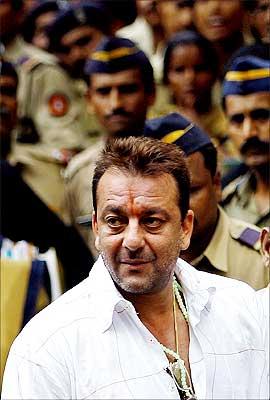
Sorabjee on Sanjay Dutt's Sentence


Has Judge P D Kode been fair to Sanjay Dutt? That was the key question Karan Thapar asked Soli Sorabjee, the former solicitor general and former attorney general, on CNN-IBN Devil’s Advocate.

Karan Thapar: Mr Sorabjee, let us start with the six-years rigorous imprisonment sentenced to Sanjay Dutt. Given that he and his family did face threats and that the gun was never used, is it excessive or fair?

Soli Sorabjee: The minimum sentence that could have been imposed is five years. Instead of five, he gave six. The question is not whether a family was under threat. That’s not the point. That doesn’t come in when you give the mandatory period required by the section.

Karan Thapar: But why did the judge go for rigorous imprisonment?

Soli Sorabjee: That is another point. The Section Penal Code doesn’t talk about imprisonment but there is another section in the penal code, Section 60, which says that it can be rigorous in part and simple in part. May be the judge could have done that.

Karan Thapar: So you think this is an area where the judge could have used his discretion and gone for simple punishment instead.

Soli Sorabjee: I don’t think it’s an error because the judge knows the best. He has seen the whole nature of the case, the circumstances, everything.

Karan Thapar: So in your opinion, you might have settled for a simple imprisonment sentence.

Soli Sorabjee: If I were the judge I would have settled for simple imprisonment for half the period and rigorous for other period.

Karan Thapar: What about something else. Many people say that Sanjay Dutt may be naïve, foolish, rash and impetuous but he is not a criminal. He has already served 16 months in jail. In those circumstances, six-year rigorous imprisonment seems too harsh and in fact excessive.

Soli Sorabjee: I don’t think so. Even if those circumstances were present the imprisonment could not have been for a term of less than five years. That’s clear. Whether rigorous or simple, the term could not have been less than five years. The judge can’t go against what the statute prescribes.

Karan Thapar: If public opinion widely believes that the sentencing is excessive and therefore unbalanced and unfair, would that not throw into question first of all its acceptability and secondly even raise question marks on the credibility (of the sentencing).

Soli Sorabjee: Public opinion, if it’s misinformed, I would like to ignore it. Does the public opinion know that the minimum sentence is 5-years. It cannot be reduced than that. Jude Kode would have committed an illegality if he gave him three.

Karan Thapar: So the only thing that can be questioned is the fact that the prison sentence could have been simple rather than rigorous, that’s all.

Soli Sorabjee: That’s one thing you can. There be two views on that.

Karan Thapar: And you have indicated already that you perhaps would have inclined personally towards simple rather than rigorous.

Soli Sorabjee: No, that’s not what I said. I said that it could have been simple for one period and rigorous for another. He has not held a toy gun or an air gun. This is a serious offence, though not as serious as TADA offence.

Karan Thapar: Let’s then come to some of the legal points that have been raised. To begin with Satish Maneshinde, Sanjay Dutt’s lawyer, has pointed out that even though all the TADA charges against Sanjay Dutt were dropped, the judge chose to refer to the fact that Sanjay had consorted at parties with criminal elements and took the characterization of a gun as weapon of mass destruction whilst explaining the six-year imprisonment.

In other words, facts that were left out at the stage of conviction were borne in mind at the time of sentencing, and Maneshinde concluded that as a result the judge misdirected himself and ended up with miscarriage of sentencing. How do you respond to that view?

Soli Sorabjee: To be quite frank, I have not read the judgement. I have not studied it. But if it is as Sanjay Dutt’s counsel says it is—and he is a very competent council—I would say that prima facie he has been acquitted of TADA charges doesn’t mean that the judge cannot take other circumstances into account as to how Dutt came in possession of those arms.

How did he come in possession? What did he try to do later on? He tried to destroy the evidence that he had the guns. So these are the factors, which you took into account for the purpose of determining whether the conviction was possible under the Arm’s Act.

Karan Thapar: So what you are saying is that even though these facts weren’t used for conviction, they could have been borne in mind at the stage of sentencing without the judge being guilty of either misdirection or mis-sentencing.

Soli Sorabjee: I would not like to say anything about misdirection, not having studied the judgement. But prima facie I don’t think so. By the way, Sanjay is in fact very fortunate. If he were convicted under the TADA, there could have been great problems.

Karan Thapar: Absolutely. And the point is, since the TADA charges were dropped, is it fair that the circumstances that could have applied to the TADA should now be made to apply to the Arm’s Act for the sentencing purposes only.

Soli Sorabjee: I don’t like to use the expression ‘fair,’ because I think the judge was a bit lenient towards him in the way he kept on adjourning the matter, not pronouncing the verdict, and various other things.

But I suppose in the ultimate analysis what you can say is: just look at the offence and then see whether this punishment of six-year rigorous imprisonment could not have been tempered with mercy.

You may temper justice with mercy but not by sentiment. Not by what Bollywood says.

Karan Thapar: What about something else? Judge Kode in explaining the six-year rigorous imprisonment also said that Sanjay was guilty of inducing others to commit a crime when he asked them to dispose off the gun.

Now is that fair because to begin with all that Sanjay did was to telephone from Mauritius. The people he spoke to were adults. They had the right to refuse. So where does the word ‘inducement’ come into this?

Soli Sorabjee: Let’s not stress the word ‘inducement’.

Karan Thapar: But that’s the word the judge used. ‘Inducement’ is a specific that suggests that you are goading someone in some manner.

Soli Sorabjee: Suppose he had persuaded? It’s the same thing. Why did he phone them from Mauritius?

Karan Thapar: But they could have refused? Had they refused he could have found another means but they didn’t. In a sense they willingly agreed.

Soli Sorabjee: But the fact that they willingly agreed doesn’t detract from the fact that he wanted them to do destroy evidence.

Karan Thapar: But it does suggest that he didn’t induce them to commit a crime.

Soli Sorabjee: Well, I don’t know. You are just reverting on the word ‘inducement’. He did try, he did persuade, he did prevail over them and they tried to do it, so they have suffered imprisonment.

Karan Thapar: All right. A second legal issue is to do with Judge Kode’s refusal to grant Sanjay relief under the Probation of Offenders’ Act. Satish Maneshinde points out that the judge erred in not calling for the Probation Officer’s report, because it was mandatory for him to do so. And thirdly, he should have also examined the four witnesses the defence had provided.

Soli Sorabjee: Well, I don’t want to join issues with Shinde. But as far as my reading of the Probation of Offenders’ Act is concerned, I don’t think it is mandatory for the judge to ask for a report.

The fact that he did not ask for a report, I don’t think is an illegality.

Karan Thapar: In considering the issue of probation, should the judge have borne in mind the fact that Sanjay has had a troubled childhood, that he has been a drug addict, has had two broken marriages and yet he has pulled himself together, recreated his life, reformed himself. And now all of that could be at risk if he breaks down in jail.

Soli Sorabjee: Actually, the two main considerations which should regulate judicial discretion in granting probation or not is the nature of the offence and the character of the accused.

For these other factors, I have only asked myself one question: Suppose these factors were present even in the cases of ordinary persons, say Abdul Jalani—I am just naming any person, then we must be very careful that there should be no tilting of these factors one way or the other because Sanjay Dutt is a popular star. Because Sanjay is a very important personality, because his sister is an MP, because they have Dasmunsi and Kapil Sibal speaking out in his favour.

Most important thing is, no signal should go to the people that this is celebrity justice delivery system.

Karan Thapar: And if these factors that I have mentioned have been borne in mind at the time of considering probation, you are worried that the wrong signals would have gone out.

Soli Sorabjee: No, wrong signals would have gone out just because these are factors are there in the case of Sanjay.

Karan Thapar: But just because Sanjay is a celebrity, it is not a reason to treat him the other way either. You seem to be suggesting that scrupulousness may have led to certain unfair treatment because things that could have been considered weren’t considered for all the wrong reasons.

Soli Sorabjee: You have raised a valid point. What I’m trying to say is what is really of importance is, the whole idea of Probation Act is reformation.

Karan Thapar: And here as I pointed out is that the danger that a reformed man may break because he hasn’t been granted benefit under the Probation Act.

Soli Sorabjee: But the whole question is his character in the past.

Karan Thapar: But the character that I’m talking about is that of a reformed man.

Soli Sorabjee: But that past thing that he had a broken marriage and that he was a drug addict and all that, to my mind, is irrelevant. How his behaviour for the last so many months was the thing which is certainly important. And it is a very moot point whether under these circumstances he should or should not have been granted probation.

Karan Thapar: It’s a moot point! In other words it is a questionable and a debatable issue.

Soli Sorabjee: Of course, it is.

Karan Thapar: Would you personally, if you had been the judge, knowing the background of Sanjay, knowing the manner in which he has reformed himself, have granted probation.

Soli Sorabjee: I don’t know how he has reformed himself. I wouldn’t like to hassle an opinion because I knew his father very well and him when TADA was first challenged.

Karan Thapar: Leave that apart. Be a judge, don’t be a friend. Would you have considered giving probate if you were the judge?

Soli Sorabjee: Yes, I would.

Karan Thapar: Now the prosecution have said that they are considering appealing against the fact that the TADA charges were dropped. If they do so, there is no doubt that they have a right to, would it be fair and wise and justified?

Soli Sorabjee: As I said Karan, I don’t know the grounds on which the TADA charges were dropped. Look at it this way: suppose they have been upheld in the case of others and by the same reason and the same evidence, they will interrupt the prosecution.

Karan Thapar: There is an argument that has been made in some newspapers that if Zebunisa Qaidri as well as Mahmood Asar could have been convicted under TADA for either keeping or delivering AK-56 guns, then for Sanjay to be treated differently when the accusation is virtually the same is unfair. Does that in a sense make sense to you?

Soli Sorabjee: I don’t think so, really. The judge must have seen that the circumstances in the two cases were different. One thing is certain that these lawyers have said these were no ordinary weapons but he did not use them.

Karan Thapar: Sanjay’s lawyers are ready to go to the Supreme Court next week, on Monday or Tuesday. What are the chances, given the background of what you have said to me, the court will either reduce the sentence or grant probate?

Soli Sorabjee: The best person to answer that would be Sanjay’s lawyer. I am saying this because I do not know the facts.

Karan Thapar: You just said that had you been the judge you would give him probation.

Soli Sorabjee: I said ‘I’ would. I am not sitting on the Supreme Court.

Karan Thapar: Given that Sanjay has already served sixteen-month imprisonment, I would reckon that somewhere at the end of the next 30 months he would become eligible for remission of his six0year sentence. Are those grounds for the Supreme Court to consider expeditious bail?

Soli Sorabjee: There is no doubt about it that the Supreme Court will consider his bail application expeditiously. And I’m sure that these factors will be taken into account while deciding whether to grant him bail or not, and the various other conditions.

Karan Thapar: So what you are saying to me and I’m repeating because it’s important that you can’t comment on whether the Supreme Court will actually grant probation or whether the SC will reduce the sentence. But you do believe that the Supreme Court will consider and perhaps grant bail expeditiously.

Soli Sorabjee: Oh, yes. Expeditiously and may be, that’s my hunch, that they may take these factors and it may lean in favour of granting him bail. But mind you that media hype could be counterproductive. Sanjay’s friends are not doing him any good. The people are getting put off because of this. That why all this is happening in the case of one person. What happens to others who are rotting in jail?

Karan Thapar: Is there also a danger that what you call media hype might exercise such pressure on Supreme Court judges, that to be scrupulous and ensure that they haven’t in any way wilted, they may actually tilt the other way?

Soli Sorabjee: I think the Supreme Court judges by now are used to media hype, and I think they ignore it. They judge the matter according to the records and according to the provisions of law.

Karan Thapar: So it’s the public opinion that you are saying will get put off by media hype, it won’t really affect the judges.

Soli Sorabjee: I don’t think so. I think the Supreme Court judges don’t get affected by this at least very consciously.

Karan Thapar: Let’s come to the political response to the sentencing of Sanjay Dutt.

Priya Ranjan Dasmunsi has gone on record to express his deep shock and surprise. He says that Sanjay’s fault was unintentional. He adds, “The time has come for the civil society to gauge the parameters for an unintentional fault.”

Should a senior cabinet minister speak out in this way against the court ruling?

Soli Sorabjee: I think it’s inappropriate, especially he being a senior cabinet minister. He may have his own views in the matter. But when he is expressing his views as a cabinet minister, he is actually questioning the correctness of the judgment.

Now the judgment will be up in appeal. And I don’t think it was appropriate.

Karan Thapar: Priya Ranjan Dasmunsi has described Sanjay’s fault as what he calls as an “unintentional fault.” Now I ask you, what is an unintentional fault? Sanjay acquired the gun intentionally. He disposed of the gun intentionally and as you know, ignorance is no defence against the law.

Soli Sorabjee: There is no question of unintentional here. He got them. He knew what he was doing, he knew from whom he has got them. He knew that he had the guns and that’s the reason why he phoned from Mauritius, as you say, to get rid off them.

Karan Thapar: So, not only speaking inappropriately and out-of-tongue, in addition the concept that he has devised of an ‘unintentional fault’ makes no sense.

Soli Sorabjee: Well, I think may be was an off-the-cuff remark. That’s a charitable explanation.

Karan Thapar: Let’s come to a bigger, wider issue. Last week, the courts completed the two major bomb blast cases: the Bombay blasts and the Coimbatore bomb blasts case.

And yet the 1992-93 Bombay riots have been treated very differently. In fact just a few people indicted by the Sri Krishna Commission for those riots have actually been brought to justice.

How do you view this disparity?

Soli Sorabjee: I think it’s scandalous. The recommendations of Justice Sri Krishna report have not yet been duly implemented, not been pursued with the energy that they should. The matters should have come up in the Supreme Court.

At one stage I was there, and I know that the Supreme Court asked the government of Maharashtra what you are doing about it? Then I don’t know what happened. I got off the case, was out off the office. But I think it must be, because it also shatters the people’s confidence in justice.

Karan Thapar: On that particular last point that you have made, do you get the feeling that India responds to those, accused of the bomb blasts, very differently to the way it responds to those accused of riots.

Soli Sorabjee: I won’t say it but it is all about the personalities involved in the Sri Krishna Commission report. I think that’s the reason they don’t want to take action.

Karan Thapar: So it’s politics rather than the differentiation between the two categories of accused?

Soli Sorabjee: Oh yes. Riots also kill people. But bomb blasts affects the whole community.

Karan Thapar: Let me interrupt to tell you why I made that particular point. The vast majority of those accused of bomb blasts particularly in the two cases that I have quoted, were Muslims. The large number of people accused of riots, particularly in the Bombay instance that I have quoted, are Hindus.

Even if this may not be deliberate religious discrimination, will it not appear so to many of those who feel they have been denied justice.

Soli Sorabjee: I don’t think Karan. That’s supportive to circumstances. The question is why you are taking action against those people, against whom action should be taken, on serious offenses? Because they are high political personalities or are there other reasons? I don’t think it’s really the question of Hindu or Muslim as such. I won’t even look at it that way. That’s portentous.

The question is that the two things must not be mixed up. The law must be implemented fully and evenhandedly in both the cases. It was not done in the case of the riots. It’s unfair and as I said, it’s scandalous.

And I think also the Supreme Court, I just read in the paper, have seized off the matter. Mr Yusuf Mushara has done some excellent work, bringing out these facts before the Supreme Court. And I hope the Supreme Court will give preemptory deductions in this matter.

Karan Thapar: What about something else? It’s also reported in the newspapers that of the 60 police officers indicted by the Sri Krishna Commission for their involvement in the riots, as well as the police officers who were identified by the Special Task Force for punishment, only a small number has actually been punished.

The rest have either been ignored or worst still gone scot-free, or in some cases, promoted.

Soli Sorabjee: That’s why I used the term ‘scandalous’. That has to be looked into.

Karan Thapar: But is it just scandalous? Will this sort of uneven treatment, infect this sort of discrimination, if I may use that word, breed disillusionment, disenchantment, and perhaps even dissent in Indian Muslims?

Soli Sorabjee: This is not discrimination by the judiciary. It’s not as if the court has said that those people should be let up. It is a fact that the political executive is not doing anything about it.

Karan Thapar: Absolutely. And the inefficiency deliberate or otherwise of the political executive to act, worst still, perhaps their culpable negligence—will it not breed disillusionment, disenchantment and dissent in Indian Muslims?

They look at their politicians and say, they behave very differently in one case, and very differently when it affects ‘us’.

Soli Sorabjee: But what is ‘they’ here?

Karan Thapar: The politicians and perhaps the police.

Soli Sorabjee: May be. The police could have traversed this all right. But the whole question is, now we should wait and see what happens after the matter is in the Supreme Court.

Karan Thapar: How long will they have to wait? The people have waited perhaps for as much as 16-17 years. Surely patience must be running out for those who are crying out for justice.

Soli Sorabjee: Correct, but now the Supreme Court seized off the matter. I think they should wait and see what the outcome of the Supreme Court directions are and I think that will restore their confidence.

Karan Thapar: So you are saying to those, who are disenchanted and disillusioned, “You have waited for so long. Wait just a little longer. The Supreme Court has taken the matter in its hands. It is bound to produce results.

Soli Sorabjee: Yes, that’s right.

Karan Thapar: It was a pleasure talking to you on Devil’s Advocate.

Soli Sorabjee: Thank you.

Labels: , ,

Google
WWW YOUR DOMAIN NAME
http://rpc.technorati.com/rpc/ping